Tuesday, 12 October 2021

Amazon and Walmart brace for crucial Diwali showdown


Amazon and Walmart brace for crucial Diwali showdownAround 6 a.m. each morning, more than 150 women troop into a multilevel warehouse in the suburbs of Chennai, a coastal city in southern India. To the humming whir of giant overhead fans, they scurry around the vast metal-covered depot, sorting parcels by zip code and tossing them into giant cage-like bins, wheeling around enormous package-laden trolleys, and loading boxes on conveyor belts.
“Let’s rock, guys!” a male voice blares in English over the PA system.

The scene at Walmart Inc.’s Chennai unit is typical of warehouses across the country, staffed by hundreds of thousands of workers who work at fever pitch ahead of the Diwali holiday season, which kicked off this month and runs through Nov. 4 -- the zenith of India’s annual shopping calendar.

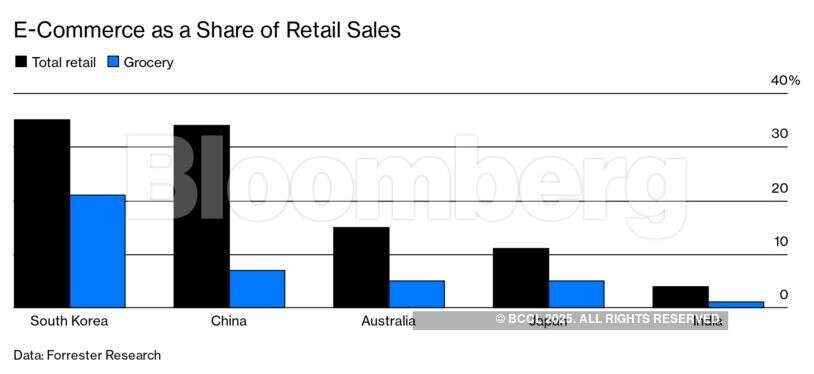
This year, the weeks-long festive season is more important than ever for Amazon.com Inc. and Walmart’s Flipkart as they seek to upend India’s retail market. It’s the first Diwali since two brutal Covid outbreaks confined millions of Indians to their homes and forced them online, many for the first time. Internet sales are still a fraction of India’s $1 trillion retail market, but a strong showing this season would pave the way for the U.S. giants’ longer-term success.

“This is a big Diwali for online retail,” Manish Tiwary, vice president of Amazon India, said in an interview.

Online sales during the Festival of Lights should leap 42% to $9.2 billion this season, Forrester Research estimates, underscoring the phenomenal speed with which consumers are gravitating toward e-commerce. Over the next four to five years, online shopping could grow five-fold with half-a-billion internet consumers by 2030, marketing trade body MMA and media agency GroupM projected last month.

Anticipating the rising demand, companies are adding staff in warehouses and delivery hubs at an accelerating clip. Flipkart added 115,000 jobs this sales season, up from 70,000 in 2020 and 50,000 in 2019. They’re also recruiting unconventionally. Aiding the effort is the introduction of so-called pink shifts, consisting of just women.
Amazon and Walmart brace for crucial Diwali showdown

At its Chennai warehouse, 23-year-old supervisor Ramya Lakshmi N is barely 45 days into the job and already in charge of managing the floor and meeting targets. Sporting short hair and dressed in a checked shirt over black trousers, she sticks out among the coworkers in hair plaits and traditional salwar kameez dresses.

“We are helping India shop,” said Lakshmi, an MBA graduate in logistics. “Pink shifts are also creating new pathways for women in a fast-growing industry.”

Monday, 11 October 2021

Technology reinventing e-commerce space


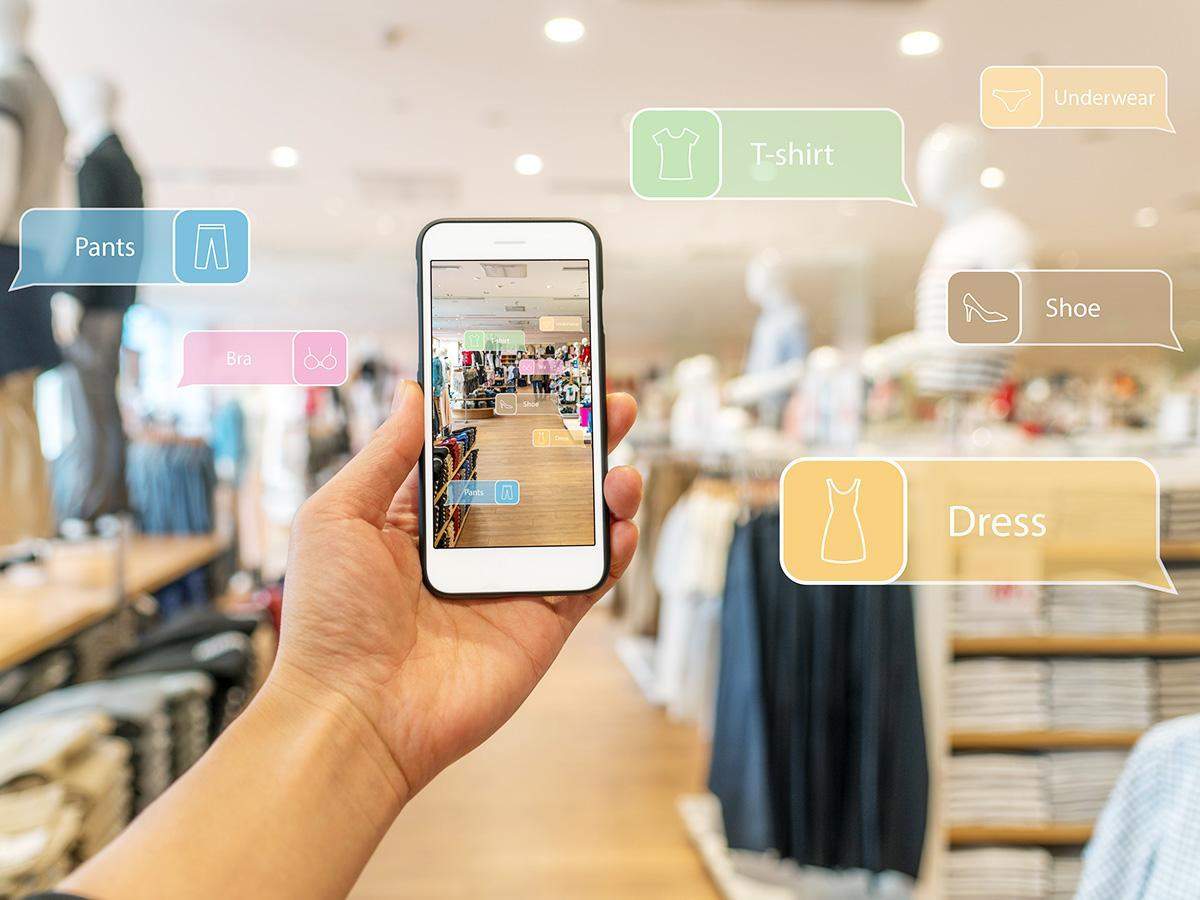
We have entered a world where the number of choices we have to showcase the business, is almost endless. E-commerce being one of them is constantly being reshaped by new ideas, strategies, trends, and best practices, at times surpassing our ability to grasp the developments. This is where technology steps in to push the business forward. Basically, technology is the backbone of E-commerce.

Increasing internet usage, growing adoption of smartphones, and surge in market awareness shall further accelerate the growth of E-commerce in India. Technology is mighty powerful and E-commerce platforms have to ride on its power if they wish to have a tight grip on customer preferences, their behavior, and purchasing trends and to design the most effective strategy based on this intelligence. For this very purpose, there are plenty of tools for betterment in search, customization, and personalization which are rapidly becoming imperative capabilities for E-commerce success.

Tools like Big Data, AI, and ML have the capability to empower local businesses and transform them to compete in a highly competitive world.

For instance, the internet is quickly turning into a living entity, giving people directions, comparing shops online before jumping to the retail space directly, suggesting dinner ideas, proposing options like zooming into high-quality visuals to help customers understand the product in a clear way before hitting the buy button. It helps in bringing everything in a single place. Billions of interconnected networks, reliable mobile internet experiences, social interactions happening over smartphones and tablets, rolling out of 4G connectivity in mobile networks, all these factors are responsible for giving rise to “Mobile Commerce”, an extended version of e-commerce.

The ubiquitous hurried and fast-paced lifestyle has made humans optimize time and energy in a smarter way like creating a grocery list just by dictating everything in words or even placing online orders for them, recommending supplementary products which go well with the shopper’s choice, and series of other possibilities. Interesting, right? Everything is linked with Artificial Intelligence or AI. Gartner predicts that around 80 percent of all customer interactions will be regulated by AI technology without any interference by human agents in the near future. Due to significant advancements in e-commerce, AI tools retailers are increasingly turning towards chatbots, smart logistics, recommendation engines, and digital assistants to provide 24×7 support to their online customers. The basic role of AI in E-commerce boils down to intelligent product recommendation which is impacting customer choices by utilizing knowledge of previous purchases, searched products, and online browsing habits. Additionally, apart from these innovations, AI-powered solutions are also leveraging data analytics tools, supply chain automation, omnichannel solutions, email marketing, and Inventory management.

In developing countries like India, access to Electronic Payment Services (EPS) system through mobile money and other financial services are critical in allowing connection to the international market for micro, small and medium-sized enterprises (SMEs). Lately, convenience is a requisite value proposition associated with E-commerce. EPS is what enables small and giant merchants to accept multiple payment types in real life. The commencement in contactless payment options such as Apple pay, Google wallet, pay pal and square wallet security levels have also reached an all-time high. Additionally, EPS facilitates faster order processing and delivery, which caters for higher efficiency in both Businesses to Business (B2B) and Business to Consumer (B2C) models.

Technology will never stop evolving and the next big thing will always be out there. Technology will never stop evolving and the next big thing will always be out there. As the digital consumer experience is ever-changing so are the options. Digital supply chain, demand-driven forecasting, personalization plugins and augmented reality drove massive changes in e-commerce experiences and they act as the fuel behind the e-commerce industry’s evolution and growth. Greater digital interactions will generate more data sets, and the E-commerce industry will continue to propel by emerging technologies. As a result, more and more customers will experience well-organized solutions down their way.

In the race of being tech savvy, we often forget the importance of technology needed for the local market that do not have sufficient high-tech knowledge or financial backup. Only when everyone around us are empowered by technology, we will head towards a technological revolution.

Put details of executives online or face action, e-commerce companies told


Put details of executives online or face action, e-commerce companies toldNEW DELHI: The consumer affairs ministry has cautioned e-commerce companies of action if they don’t put out the details and contact numbers of their executives on their portals/platforms to address consumer grievances.

In a recent circular, the ministry said the Central Consumer Protection Authority (CCPA) has come to know that some e-commerce entities are not displaying details of sellers, mandated as per the Consumer Protection (E-commerce) Rules, 2020, on their platform.

The circular said, “Any person found violating the rules may face action under the Act, if, after investigation, the central authority has reason to believe that the practices are found unfair and prejudicial to consumers' interest. Hence, industry associations are hereby requested to give wide publicity to the provisions of the ibid rules and to impress upon their members to ensure compliance of the rules to ensure adequate redressal mechanism is accessible to consumers while purchasing goods or services using e-commerce.”

Amazon, Flipkart, others see strong festive season sales despite Shradh start


Amazon, Flipkart, others see strong festive season sales despite Shradh startBengaluru: As the first week of the flagship festive sales comes to a close, ecommerce players are said to have recorded higher sales than last year, but the numbers are likely to be relatively smaller than what they had expected in the run up to the sale events, according to industry executives, analysts and logistics experts.

Market research firm Forrester had said that for the first week ecommerce sales on platforms like Flipkart, Amazon India and others — including new entrants such as Reliance Industries’ JioMart — would be around $6.5 billion in gross merchandise value, and that the overall festive month would notch up as much as $9.2 billion. RedSeer Consulting had also predicted GMV of $9 billion for the festive month (October3-November 3).

GMV in e-commerce refers to the total value of sales on a platform during a given period, including discounts but excluding returns.


The first-week GMV may have lagged due to last-minute changes to sale dates, which meant sales started during the Hindu calendar’s ‘Shradh’ month, which is considered inauspicious for making purchases, industry executives, analysts and logistics experts said. But etailers can still make up for that in the next two sale events before Diwali, which could take the daily shipment volumes to about 9 million, compared with more than 6 million last year, industry players said.

“Ecommerce sales have grown in good double digits compared with last year but perhaps not as much as expected by the industry initially this year,” said TA Krishnan, cofounder of Ecom Express, an ecommerce-focused delivery firm. “The sales starting during Shradh was one factor which would have played a role in this along with the fact that overall availability of new smartphone launches was limited due to the chip-shortage issue,”

ET reported last month how Walmart-owned Flipkart and Amazon India made back-to-back changes to their sale dates over a weekend so they were not left behind in starting the sales. ET also reported that the chip shortage issue had spilled over to segments like smartphones, large-screen TVs and laptops, affecting their supplies.

Krishnan, who is also Ecom Express’ chief executive, said the next two sale cycles before Diwali would still be able to add to the current momentum and daily shipments can hit 9-10 million.

While this is a big number, players like Meesho and DealShare expanding their operations to non-metro markets to deliver groceries is adding to the growth in ecommerce volumes. The Tata Group and Reliance Industries are also holding online sale events, but they still have a relatively smaller share, industry executives said.

RedSeer on Saturday said gross sales between October 2 and October 5 (the early access period for premium subscribers on Flipkart and Amazon) were around $2.7 billion and on track to hit earlier estimates of $4.8 billion in the first week of sales. The estimate includes sales on social commerce platforms and grocery deliveries.

While smartphones remain one of the biggest sales drivers on ecommerce platforms during the Diwali sales, there has been relatively fewer number of device launches this time due to supply-side issues. For instance, the newly launched iPhone13 was unavailable on Flipkart and Amazon India after the first set of devices were sold out. Apple, though, is selling the device on its India ecommerce platform.

Smartphones typically contribute more than half the total gross sales in online shopping.

Jitender Miglani, a senior forecast analyst at Forrester, said many large-ticket purchases were fuelled by options like exchanging the existing products as well as financing deals, such as ‘buy now pay later’. “The trends have been good so far. Grocery sales are expected to further pick up in the final sale before Diwali next month,” he said, adding that it would take at least a few weeks for the research firm to come out with data on what kind of sales etailers have achieved compared with estimates.

A report from Unicommerce, an ecommerce solutions provider, last week said order volume for fast-moving consumer goods (FMCG) was up by 74% during the first eight months of 2021 compared with the same period of last year.

While the Shradh period seems to have had an effect, a leading wearables firm’s founder said the company had recorded two times more sales than last year in the first week of the flagship sales. “There are still at least two more sale events planned and that should do well,” said this person, who leads one of the prominent homegrown direct-to-consumer brands in the wearables space.

Ambitious expectations from etailers for the festive sale came on the back of a gradual recovery in sales after the second wave of the pandemic. It accelerated in the run up to the festive sales like Big Billion Days and Great Indian Festival.

ET, citing industry sources, reported last month that the Flipkart Group, including Myntra, was on track to record over 50% growth in gross sales at $23 billion this calendar year. A report from consultancy firm Bain & Co. said the overall industry would grow more than 30% to over $50 billion in GMV this fiscal year. According to it, GMV in FY21 at $38 billion had grown 25% from the previous year.

“Tier 3 and 4 markets are playing a critical role in the overall recovery in consumer spending and consumers are more conscious of issues like the Shradh,” a senior logistics executive said.

Equalisation levy on Facebook, Amazon, Google may go only in 2-3 years


Amazon, Flipkart, others see strong festive season sales despite Shradh startBengaluru: As the first week of the flagship festive sales comes to a close, ecommerce players are said to have recorded higher sales than last year, but the numbers are likely to be relatively smaller than what they had expected in the run up to the sale events, according to industry executives, analysts and logistics experts.

Market research firm Forrester had said that for the first week ecommerce sales on platforms like Flipkart, Amazon India and others — including new entrants such as Reliance Industries’ JioMart — would be around $6.5 billion in gross merchandise value, and that the overall festive month would notch up as much as $9.2 billion. RedSeer Consulting had also predicted GMV of $9 billion for the festive month (October3-November 3).

GMV in e-commerce refers to the total value of sales on a platform during a given period, including discounts but excluding returns.

The first-week GMV may have lagged due to last-minute changes to sale dates, which meant sales started during the Hindu calendar’s ‘Shradh’ month, which is considered inauspicious for making purchases, industry executives, analysts and logistics experts said. But etailers can still make up for that in the next two sale events before Diwali, which could take the daily shipment volumes to about 9 million, compared with more than 6 million last year, industry players said.

“Ecommerce sales have grown in good double digits compared with last year but perhaps not as much as expected by the industry initially this year,” said TA Krishnan, cofounder of Ecom Express, an ecommerce-focused delivery firm. “The sales starting during Shradh was one factor which would have played a role in this along with the fact that overall availability of new smartphone launches was limited due to the chip-shortage issue,”

ET reported last month how Walmart-owned Flipkart and Amazon India made back-to-back changes to their sale dates over a weekend so they were not left behind in starting the sales. ET also reported that the chip shortage issue had spilled over to segments like smartphones, large-screen TVs and laptops, affecting their supplies.

Krishnan, who is also Ecom Express’ chief executive, said the next two sale cycles before Diwali would still be able to add to the current momentum and daily shipments can hit 9-10 million.

While this is a big number, players like Meesho and DealShare expanding their operations to non-metro markets to deliver groceries is adding to the growth in ecommerce volumes. The Tata Group and Reliance Industries are also holding online sale events, but they still have a relatively smaller share, industry executives said.

RedSeer on Saturday said gross sales between October 2 and October 5 (the early access period for premium subscribers on Flipkart and Amazon) were around $2.7 billion and on track to hit earlier estimates of $4.8 billion in the first week of sales. The estimate includes sales on social commerce platforms and grocery deliveries.

While smartphones remain one of the biggest sales drivers on ecommerce platforms during the Diwali sales, there has been relatively fewer number of device launches this time due to supply-side issues. For instance, the newly launched iPhone13 was unavailable on Flipkart and Amazon India after the first set of devices were sold out. Apple, though, is selling the device on its India ecommerce platform.

Smartphones typically contribute more than half the total gross sales in online shopping.

Jitender Miglani, a senior forecast analyst at Forrester, said many large-ticket purchases were fuelled by options like exchanging the existing products as well as financing deals, such as ‘buy now pay later’. “The trends have been good so far. Grocery sales are expected to further pick up in the final sale before Diwali next month,” he said, adding that it would take at least a few weeks for the research firm to come out with data on what kind of sales etailers have achieved compared with estimates.

A report from Unicommerce, an ecommerce solutions provider, last week said order volume for fast-moving consumer goods (FMCG) was up by 74% during the first eight months of 2021 compared with the same period of last year.

While the Shradh period seems to have had an effect, a leading wearables firm’s founder said the company had recorded two times more sales than last year in the first week of the flagship sales. “There are still at least two more sale events planned and that should do well,” said this person, who leads one of the prominent homegrown direct-to-consumer brands in the wearables space.

Ambitious expectations from etailers for the festive sale came on the back of a gradual recovery in sales after the second wave of the pandemic. It accelerated in the run up to the festive sales like Big Billion Days and Great Indian Festival.

ET, citing industry sources, reported last month that the Flipkart Group, including Myntra, was on track to record over 50% growth in gross sales at $23 billion this calendar year. A report from consultancy firm Bain & Co. said the overall industry would grow more than 30% to over $50 billion in GMV this fiscal year. According to it, GMV in FY21 at $38 billion had grown 25% from the previous year.

“Tier 3 and 4 markets are playing a critical role in the overall recovery in consumer spending and consumers are more conscious of issues like the Shradh,” a senior logistics executive said.