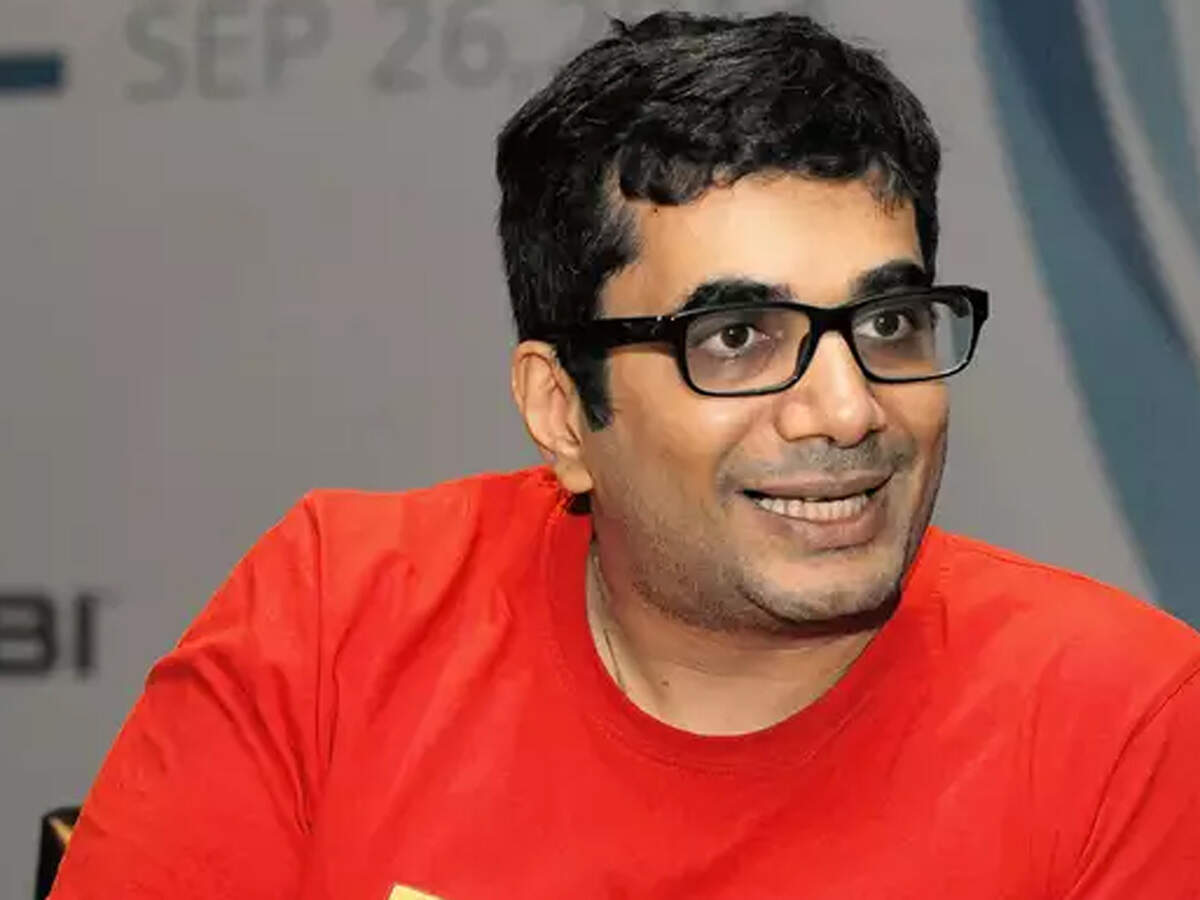
 GOQii has taken online marketplace Flipkart to court over deep discounting, and received a stay order, preventing Flipkart from, in the interim, selling the products. Vishal Gondal, Founder, GOQii, talks to ETNOW about the court case and more.
Edited excerpts:Where do things stand as of now with you and how big a blow is this really turning out to be?Since the case is sub judice I do not want to specifically go into some of these details but I want to talk more about the impact and having faced it firsthand. Customers are cancelling your orders, when corporates who placed thousands of units with you are saying hey! your product is sold at this price, when you are cheating us and then customers are returning your product. It was a terrible nightmare we had to go through.Look at the kind of pictures you are getting on twitter.Yes, on twitter there are people who have posted that they have got newspapers, empty boxes, broken seal, products being reused. We have currently offered that any person who complains we will give them a free replacement. It is a health product, we want people to be healthy not stressed because of a purchase. So for us, it is about protecting my brand interest, my brand image, we are a health product. So, it has been a nightmare.How does it work when GOQii decides to sell on the platform Flipkart? What do you negotiate in your deal when it comes to prices?In general, we have contracts with Flipkart, we have contracts with Cloudtail who sells to Amazon, Croma etc. We have a wholesale price. In a way we give them our services and then they typically have their own margins and that is when they sell the products. Specifically when there are sales like Diwali or Christmas or Big Billion Day, on those days we would work with them to offer slightly more discounts to support and we do marketing activities.This is opening up a hornet’s net because if they are going to go this route, this is going to cause a lot of chaos for several brands. So, what is the deeper significance of this as well in terms of policy, in terms of being able to regulate what is happening online?The most important part here is the interest of consumers. While in one way, they are benefiting with the discount, on the other hand, we have seen what is going on because if brands like us are going to suffer, it may even take us out of business very frankly. The reason we have to do this is because we had no option. As a start-up, we do not have the resources to fight these billion trillion dollar companies. We are here to do business, to make people healthy but we were forced into this. I am glad that the court at least gave us some relief. We are assessing the situation and my hope is the government should look at this very seriously because this can have an impact to small sellers, SMEs. It can also have an impact on the larger ecosystem especially when India is going to be the biggest market for ecommerce, online taxi services, food delivery.
Having faced this yourself, what would you want the government to do in terms of a policy change? What would be idea that can really protect founders and businesses like yours?Clearly, business needs to work on the principle of demand supply. Right now the pricing and all that typically works on that. If I buy at x price, I will not sell it at a huge loss. Maybe if it is not selling, I will take 10% loss, 20% loss. Right now, that logic is somehow not working in this marketplace.How many of your sales actually come from online platforms like Flipkart or others?We have three channels; online of course, we sell, we then have a huge offline partnership and then we have enterprises. Insurance companies work with us, banks work with us, corporates get their employees on our platforms. So, we have several channels. Online is about 20-30% of our sales but the problem is not this 30%. The problem is that discounting here has impacted my 100% because everybody else is coming on our backs and besides that the customer backlash online where they are saying they are being scammed, the products are fake. It is a storm and we are going to hopefully sail through this I hope.What is the timeframe that you are looking at to resolve this? Are there going to be restrictions on how you are functioning in terms of your sales, your other streams?The order just came in last week. The next hearing is this week. With court matters, this could take a little longer. We are prepared for that and like I said, for a start-up we are putting a lot of our resources now. I do not want to do this but we are forced.It is quite a significant discount that they have given and on top of that like you said it is a damage to the brand. Is it not also damaging Flipkart if they are going to be selling empty boxes?Flipkart should possibly answer this. At least what I can say is that any person who has bought from Flipkart during this sale and who have suffered, we are giving them a free replacement, no questions asked. I do not want at least the GOQii’s brand to suffer.
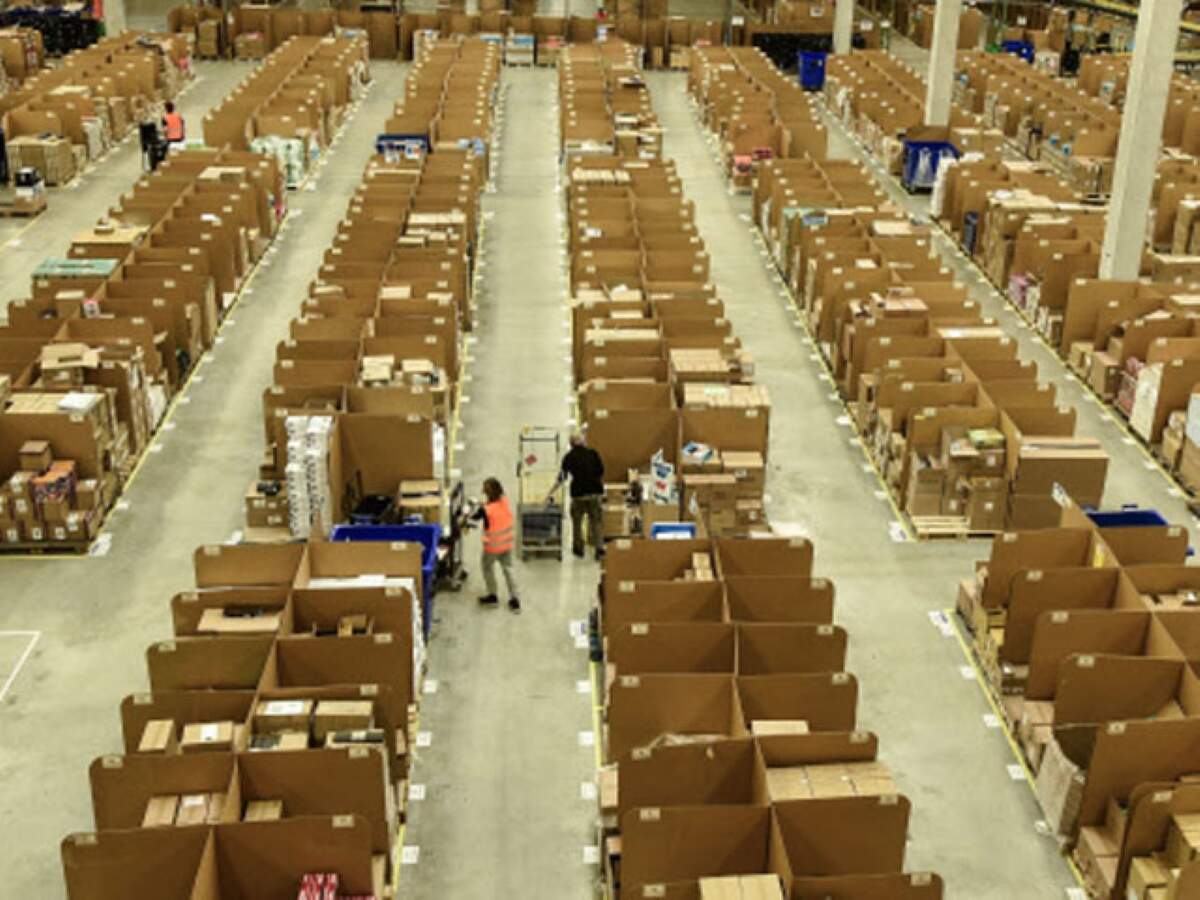 New Delhi: E-commerce major Amazon Monday said it is expanding its 'packaging-free shipment' (PFS) programme, an India-first initiative, to nine cities including Delhi, Mumbai, Ahmedabad and Nagpur.The programme, under which orders are shipped in their original packaging without any secondary or additional packaging, will also be available in Bengaluru, Gurgaon, Noida, Chennai and Hyderabad.Through this initiative, Amazon aims to reduce the waste generated from secondary packaging of customer orders."The program is one of many sustainability initiatives to help achieve Shipment Zero, the company’s vision to make all Amazon shipments net zero carbon, with 50% of all shipments net zero by 2030’. The pilot began in July last year in Bengaluru when we delivered the relevant customer orders packaging-free and received positive feedback," an Amazon India spokesperson said.The programme is applicable on certain orders based on pre-defined parameters like location of the customer, distance the order has to travel and the category of product ordered.Products that are shipped packaging-free include automotive accessories, tech accessories, home and home improvement products, shoes and luggage.
Liquids, fragile items, or products that need privacy are never shipped packaging free, the spokesperson said.Akhil Saxena, Vice President (Customer Fulfillment) at Amazon India, said feedback from customers had indicated that they are looking for more sustainable packaging solutions."This has led to the new packaging innovation - delivering products packaging-free. Our investment in protecting the environment ensures a triple win -- it is good for our planet, good for our customers and community, and good for the business," he added.He said customers who receive their orders without secondary packing are informed of this initiative via email and also in a paper pouch placed on their physical shipment
New Delhi: E-commerce major Amazon Monday said it is expanding its 'packaging-free shipment' (PFS) programme, an India-first initiative, to nine cities including Delhi, Mumbai, Ahmedabad and Nagpur.The programme, under which orders are shipped in their original packaging without any secondary or additional packaging, will also be available in Bengaluru, Gurgaon, Noida, Chennai and Hyderabad.Through this initiative, Amazon aims to reduce the waste generated from secondary packaging of customer orders."The program is one of many sustainability initiatives to help achieve Shipment Zero, the company’s vision to make all Amazon shipments net zero carbon, with 50% of all shipments net zero by 2030’. The pilot began in July last year in Bengaluru when we delivered the relevant customer orders packaging-free and received positive feedback," an Amazon India spokesperson said.The programme is applicable on certain orders based on pre-defined parameters like location of the customer, distance the order has to travel and the category of product ordered.Products that are shipped packaging-free include automotive accessories, tech accessories, home and home improvement products, shoes and luggage.
Liquids, fragile items, or products that need privacy are never shipped packaging free, the spokesperson said.Akhil Saxena, Vice President (Customer Fulfillment) at Amazon India, said feedback from customers had indicated that they are looking for more sustainable packaging solutions."This has led to the new packaging innovation - delivering products packaging-free. Our investment in protecting the environment ensures a triple win -- it is good for our planet, good for our customers and community, and good for the business," he added.He said customers who receive their orders without secondary packing are informed of this initiative via email and also in a paper pouch placed on their physical shipment
 BENGALURU/MUMBAI: Digital payments company Paytm is in talks to acquire Mumbai-based insurance marketplace Coverfox for $100-120 million in an allcash deal, said two people aware of the matter. If the transaction goes through, it will be the largest acquisition by the Vijay Shekhar Sharma-led company, which is making inroads into the financial services segment through its subsidiary Paytm Money. This will also see Paytm emerge as a direct competitor to the country’s largest online insurance marketplace PolicyBazaar. SoftBank Vision Fund, a large investor in Paytm’s parent One97 Communications, is also a significant shareholder in Policybazaar, which may pose challenges to the deal, people close to the development said. “The Paytm board is in the process of finalising the contours of the deal,” said one of them. Coverfox in Talks to Raise $50 million“There is still a chance that it may fall through as the board deliberates on the pros and cons of the transaction,” the person added. In all, Coverfox has raised $40 million in capital and counts SAIF Partners, Accel Partners, NR Narayana Murthy’s Catamaran Ventures and International Finance Corporation among its investors. These shareholders are expected to get an exit if the deal takes place. SAIF is a common investor in Paytm and Coverfox.
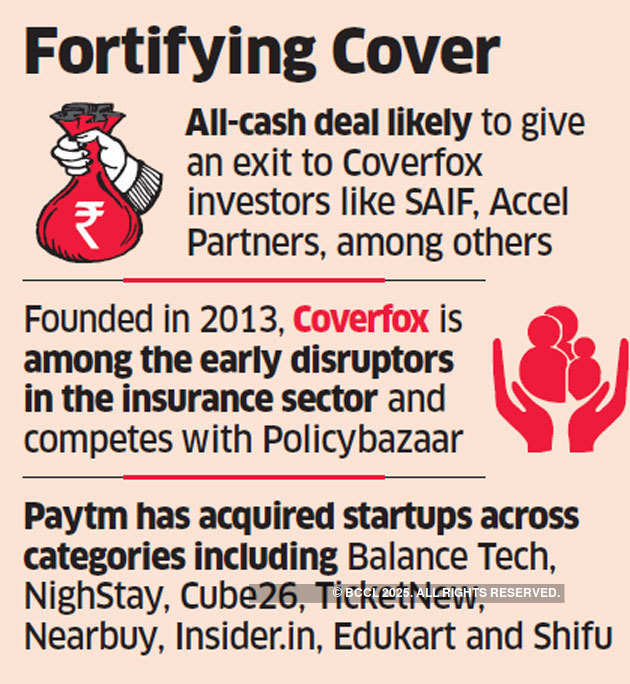 Founded in 2013 by Varun Dua and Devendra Rane, Coverfox has been in talks to raise a $50 million series D round even as the acquisition talks have been going on in parallel, another source said. Dua moved out in 2017 to head Acko, a new-age insurance firm that competes with the likes of Digit Insurance, which is backed by Canadian billionaire Prem Watsa’s Fairfax Holdings.Coverfox offers both life and non-life insurance policies. It has 50,000 agents and offers products from 45 insurance companies. The company sold premiums worth $100 million through its platform and generated $22 million in revenue with a million transactions done last year. Having started off by selling motor insurance, Coverfox wants to push term and life insurance products in the future driven mainly by its offline agent base.Paytm’s Sharma and Coverfox CEO Premanshu Singh didn’t respond to ET's queries.
Paytm money pushAfter gaining a foothold in the digital payments business, One97 Communications launched Paytm Money in September 2018 with the intention of cornering the online mutual funds market. Having started with around a dozen asset management companies (AMCs), it now has all 40 in the country on board, offering direct mutual funds to clients. Paytm doesn’t reveal total assets under management but crossed the 1million user mark within six months of its launch in January 2019, the company has said. Paytm Money competes with the likes of ET Money, owned by Times Internet, a part of the Times Group, which publishes this paper, Zerodha, FundsIndia and Scripbox.Since its launch, Paytm Money has diversified into stock broking. Having received a broking licence it intends to become a full-stack personal financial management application. In an earlier conversation with ET, Paytm's Sharma had said that insurance is a big area of focus for the company and it will look to expand its personal finance portfolio to shore up margins currently lacking in its core digital payments business. Paytm is already a registered corporate agent for all forms of insurance products as per the Insurance Regulatory and Development Authority of India.
Founded in 2013 by Varun Dua and Devendra Rane, Coverfox has been in talks to raise a $50 million series D round even as the acquisition talks have been going on in parallel, another source said. Dua moved out in 2017 to head Acko, a new-age insurance firm that competes with the likes of Digit Insurance, which is backed by Canadian billionaire Prem Watsa’s Fairfax Holdings.Coverfox offers both life and non-life insurance policies. It has 50,000 agents and offers products from 45 insurance companies. The company sold premiums worth $100 million through its platform and generated $22 million in revenue with a million transactions done last year. Having started off by selling motor insurance, Coverfox wants to push term and life insurance products in the future driven mainly by its offline agent base.Paytm’s Sharma and Coverfox CEO Premanshu Singh didn’t respond to ET's queries.
Paytm money pushAfter gaining a foothold in the digital payments business, One97 Communications launched Paytm Money in September 2018 with the intention of cornering the online mutual funds market. Having started with around a dozen asset management companies (AMCs), it now has all 40 in the country on board, offering direct mutual funds to clients. Paytm doesn’t reveal total assets under management but crossed the 1million user mark within six months of its launch in January 2019, the company has said. Paytm Money competes with the likes of ET Money, owned by Times Internet, a part of the Times Group, which publishes this paper, Zerodha, FundsIndia and Scripbox.Since its launch, Paytm Money has diversified into stock broking. Having received a broking licence it intends to become a full-stack personal financial management application. In an earlier conversation with ET, Paytm's Sharma had said that insurance is a big area of focus for the company and it will look to expand its personal finance portfolio to shore up margins currently lacking in its core digital payments business. Paytm is already a registered corporate agent for all forms of insurance products as per the Insurance Regulatory and Development Authority of India.
 LONDON - Online retail giant Amazon said it would open pop-up shops in Britain to give more than 100 small online businesses an opportunity to sell on the high street for the first time.The first of the 10 stores, which are branded "Clicks and Mortar" and will sell homeware, health and beauty, food and drink and electronics, opens in Manchester, north England, on Monday, Amazon said.The British high street has struggled in recent years, as major chains including Marks & Spencer and Debenhams have announced store closures. Others such as Toys R Us and Maplins have shut up shop entirely, with the rise of internet shopping one of the factors in their demise.Amazon, which is working with small business support group Enterprise Nation on the project, said it would submit independent research on the success of the pilot stores to help develop the government's "Future High Street" strategy."Small businesses are one of our most important customer groups, and we're thrilled to work with Enterprise Nation to design a comprehensive package to help entrepreneurs across the UK grow their businesses, both in-store and online," said Doug Gurr, UK Country Manager, Amazon.
Amazon is also providing 1 million pounds ($1.26 million) to train over 150 full-time apprentices to help small businesses increase their productivity and boost their online sales.Foldable adult scooter company "Swifty Scooters", leather smartphone accessories maker "Torro Cases" and men's skincare product maker "Altr for Men" are among the online brands that will be selling in the shops for the first time, Amazon said. ($1 = 0.7910 pounds) (Reporting by Paul Sandle; editing by David Evans)
LONDON - Online retail giant Amazon said it would open pop-up shops in Britain to give more than 100 small online businesses an opportunity to sell on the high street for the first time.The first of the 10 stores, which are branded "Clicks and Mortar" and will sell homeware, health and beauty, food and drink and electronics, opens in Manchester, north England, on Monday, Amazon said.The British high street has struggled in recent years, as major chains including Marks & Spencer and Debenhams have announced store closures. Others such as Toys R Us and Maplins have shut up shop entirely, with the rise of internet shopping one of the factors in their demise.Amazon, which is working with small business support group Enterprise Nation on the project, said it would submit independent research on the success of the pilot stores to help develop the government's "Future High Street" strategy."Small businesses are one of our most important customer groups, and we're thrilled to work with Enterprise Nation to design a comprehensive package to help entrepreneurs across the UK grow their businesses, both in-store and online," said Doug Gurr, UK Country Manager, Amazon.
Amazon is also providing 1 million pounds ($1.26 million) to train over 150 full-time apprentices to help small businesses increase their productivity and boost their online sales.Foldable adult scooter company "Swifty Scooters", leather smartphone accessories maker "Torro Cases" and men's skincare product maker "Altr for Men" are among the online brands that will be selling in the shops for the first time, Amazon said. ($1 = 0.7910 pounds) (Reporting by Paul Sandle; editing by David Evans)
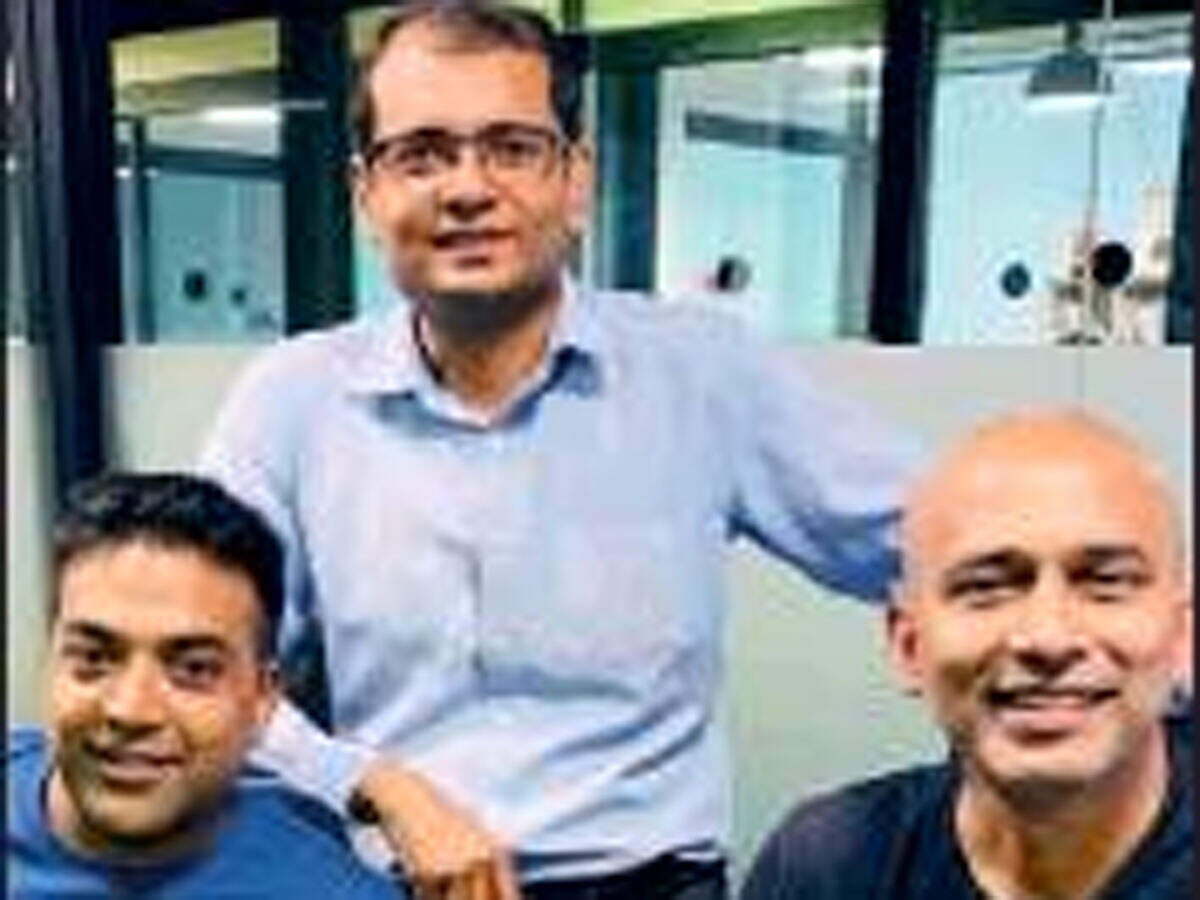 There’s a new startup fund in town, set up by three seasoned executives who have held prominent positions at firms like Alibaba, Paytm, Flipkart and Myntra.Multiply Ventures is banking on the vast industry experience of the trio — Raveen Sastry, Sanjay Ramakrishnan and Bhushan Patil — to become a $50-million fund and invest in promising businesses in the country.The early-stage venture capital firm has received $10 million in commitments so far. Paytm founder Vijay Shekhar Sharma, Myntra co-founder Mukesh Bansal, Zeta Interactive CEO David A Steinberg and Alibaba executives have backed it as part of these initial commitments.Sastry, Ramakrishnan and Patil have spent two decades working at startups in Indiaand China. Sastry is Myntra’s co-founder and Ramakrishnan had stints at Flipkart and Myntra. Patil has worked at Alibaba and Paytm.Patil, who quit Paytm last month, brings his China experience to the table, whereas Sastry and Ramakrishnan have backed around 30 startups in their individual capacity. Some of these startups are SME banking platform Open, health-technology firm Mfine, artificial intelligence venture Mad Street Den and agriculture technology company Gramophone. “This [Multiply Ventures] will be a single platform for capital, expertise and ecosystem access. This is one of the best times for startups to grow in India and we are largely focusing on three sectors — new retail, fin-tech and ed-tech,” Ramakrishnan said. The investments, he added, would be mostly in Pre-Series A to Series A stage.
Multiply Ventures is already screening startups for its first set of bets, even as it looks to rope in new investors for the fund from China and the US. The firm’s entry follows other early-stage funds launched by former startup investors and executives who worked with these companies.Former Alibaba executives Benny Chen, Kshitij Karundia and Mulyono Xu, who have seen India and Southeast Asia investments for the group closely, set up BAce Capital. Ravi Venkatesh and Edwina Yeo, who worked at Tiger Global, one of the most influential startup investors in India, formed Tanglin Ventures, a $50-million fund for earlystage startups.
There’s a new startup fund in town, set up by three seasoned executives who have held prominent positions at firms like Alibaba, Paytm, Flipkart and Myntra.Multiply Ventures is banking on the vast industry experience of the trio — Raveen Sastry, Sanjay Ramakrishnan and Bhushan Patil — to become a $50-million fund and invest in promising businesses in the country.The early-stage venture capital firm has received $10 million in commitments so far. Paytm founder Vijay Shekhar Sharma, Myntra co-founder Mukesh Bansal, Zeta Interactive CEO David A Steinberg and Alibaba executives have backed it as part of these initial commitments.Sastry, Ramakrishnan and Patil have spent two decades working at startups in Indiaand China. Sastry is Myntra’s co-founder and Ramakrishnan had stints at Flipkart and Myntra. Patil has worked at Alibaba and Paytm.Patil, who quit Paytm last month, brings his China experience to the table, whereas Sastry and Ramakrishnan have backed around 30 startups in their individual capacity. Some of these startups are SME banking platform Open, health-technology firm Mfine, artificial intelligence venture Mad Street Den and agriculture technology company Gramophone. “This [Multiply Ventures] will be a single platform for capital, expertise and ecosystem access. This is one of the best times for startups to grow in India and we are largely focusing on three sectors — new retail, fin-tech and ed-tech,” Ramakrishnan said. The investments, he added, would be mostly in Pre-Series A to Series A stage.
Multiply Ventures is already screening startups for its first set of bets, even as it looks to rope in new investors for the fund from China and the US. The firm’s entry follows other early-stage funds launched by former startup investors and executives who worked with these companies.Former Alibaba executives Benny Chen, Kshitij Karundia and Mulyono Xu, who have seen India and Southeast Asia investments for the group closely, set up BAce Capital. Ravi Venkatesh and Edwina Yeo, who worked at Tiger Global, one of the most influential startup investors in India, formed Tanglin Ventures, a $50-million fund for earlystage startups.
