 BENGALURU: Another wave of consolidation has hit the Indian ecommerce industryas smaller etailers struggle to stay afloat. After collectively racking up around $400 million in investor capital, in the past few months a clutch of smaller online marketplaces such as Shop-Clues, Craftsvilla, Voonik, Wooplr and Elanic are shutting shop, pivoting their business model or opting for outright sale. Most of these web retailers were targeting non-metro shoppers and selling wares from smaller merchants. But with the growth of the Indian ecommerce market slowing and Amazon and Walmart-owned Flipkart dominating the industry, the second tier of etailers is now faced with an existential crisis.Financial backers of these companies have either written off their investments or aren’t ready to plough more capital into businesses that won’t be able to fight bigger rivals.‘Trust Factor Missing’Investors and executives ET spoke to indicated that these businesses have struggled as they sold inferior products and had a weak supply chain and inventory, leading to high returns and close to zero customer repeats, making them unviable.
 “After you tap a customer base of 20 million users, it is important to drive repeat purchases and cut down on returns,” said an investor who has backed one of the companies that’s struggling to keep afloat. “But across all these companies, we realised that the trust factor with the brand was missing for both customers and sellers.”Estimates by logistics companies and industry sources say returns from most of these marketplaces and social commerce platforms stood at 35-40% for the apparel category while for Flipkart’s Myntra or Amazon Fashion, the number is close to 20%. Logistics companies said returns to origin — when a package is not accepted by a customer — were as high as 10-15% for these businesses.
The All India Online Vendors Association, a lobby group that represents small online merchants, said shipping costs are Rs 65 on average and reverse shipping costs another Rs 75. “A lot of the time, damaged products come in return shipments, for which sellers are unable to penalise consumers due to marketplace policies,” said a spokesperson for the grouping.Among the best funded in the group, ShopClues, which built its business as a long-tail marketplace, is in the final stages of closing an all-stock sale to rival Snapdeal, as ET reported last week. ShopClues has in all raised $250 million from Tiger Global and Nexus Venture Partners among others but has not been able to shore up equity capital since 2016.Others like ethnic-wear marketplace Craftsvilla, which mopped up more than $50 million from investors including Sequoia Capital, Nexus Venture Partners and Lightspeed Venture Partners, is also on the block, as reported by Entrackr. Regulatory filings show that the company’s topline has been stagnant at Rs 31.5 crore in 2018, little changed from Rs 30.4 crore in 2017. “We are currently looking for a merger or an acquisition to lower customer acquisition costs in order to become profitable and grow faster,” Craftsvilla cofounder and CEO Manoj Gupta told ET.Sujayath Ali, founder of Voonik, which recently pivoted to only selling private labels, said maintaining quality and consistency in the marketplace model in apparel is difficult. “We have failed a number of times,” he said. Earlier this month, ET reported that Voonik was looking to build a full-stack private label business as it believes this will lead to better quality control and margins. Voonik counts Sequoia Capital, Beenext and Times Internet among its investors. Times Internet is a part of the Times Group, which publishes ET.While Ali declined to provide numbers, two investors told ET that Voonik and Craftsvilla were averaging 13,000 -16,000 orders a day with an average value of Rs 700. Reseller platform Wooplr's orders are estimated to have been close to 4,000-6,000 before it shuttered.Having started as an Instagram account that showcased women’s fashion, Wooplr evolved into an influencer-led ecommerce platform before shutting a few weeks ago. Late last year, Tiger Global-backed Roposo, which started off as a fashion-focused social network offering curated apparel, footwear and accessories, pivoted to becoming a video entertainment platform.“With users’ engagement growing on the app, we realised that people were interested in different topics and felt restricted with content on fashion alone,” Roposo CEO Mayank Bhangadia said in an email.Investors had backed these businesses in the belief that smaller towns and cities would boast of at least a 100 millionstrong market where shoppers aspired for a wider selection and lower prices. However, with Flipkart and Amazon raising the standard for customer service and subsidising products for first-time buyers, customers have shifted to these marketplaces.A wholesaler from Surat who makes private label clothing for online sellers including Voonik and Craftsvilla told ET he often gets requests to list sarees for Rs 200-600. “With a Rs 299-399 saree, which includes commission, cost of manufacturing and logistics, there is no margin to bring in high quality,” he pointed out.Ankur Pahwa, partner and national leader, ecommerce and consumer internet at EY India, said that with high online customer acquisition costs, the smaller players have limited offerings on their marketplaces, which is a key reason why customers tend to incline toward Amazon or Flipkart.A Forrester Research report said that Snapdeal, ShopClues and Paytm Mall, which focus on the low-price category, are finding it difficult to retain customers and increase average ticket size. With the acquisition of Flipkart by Walmart and Amazon’s focus on shifting beyond metropolitan areas and tier II cities, these players will find it difficult to grow in 2019 and to raise funds to subsidise that expansion, the report stated.
“After you tap a customer base of 20 million users, it is important to drive repeat purchases and cut down on returns,” said an investor who has backed one of the companies that’s struggling to keep afloat. “But across all these companies, we realised that the trust factor with the brand was missing for both customers and sellers.”Estimates by logistics companies and industry sources say returns from most of these marketplaces and social commerce platforms stood at 35-40% for the apparel category while for Flipkart’s Myntra or Amazon Fashion, the number is close to 20%. Logistics companies said returns to origin — when a package is not accepted by a customer — were as high as 10-15% for these businesses.
The All India Online Vendors Association, a lobby group that represents small online merchants, said shipping costs are Rs 65 on average and reverse shipping costs another Rs 75. “A lot of the time, damaged products come in return shipments, for which sellers are unable to penalise consumers due to marketplace policies,” said a spokesperson for the grouping.Among the best funded in the group, ShopClues, which built its business as a long-tail marketplace, is in the final stages of closing an all-stock sale to rival Snapdeal, as ET reported last week. ShopClues has in all raised $250 million from Tiger Global and Nexus Venture Partners among others but has not been able to shore up equity capital since 2016.Others like ethnic-wear marketplace Craftsvilla, which mopped up more than $50 million from investors including Sequoia Capital, Nexus Venture Partners and Lightspeed Venture Partners, is also on the block, as reported by Entrackr. Regulatory filings show that the company’s topline has been stagnant at Rs 31.5 crore in 2018, little changed from Rs 30.4 crore in 2017. “We are currently looking for a merger or an acquisition to lower customer acquisition costs in order to become profitable and grow faster,” Craftsvilla cofounder and CEO Manoj Gupta told ET.Sujayath Ali, founder of Voonik, which recently pivoted to only selling private labels, said maintaining quality and consistency in the marketplace model in apparel is difficult. “We have failed a number of times,” he said. Earlier this month, ET reported that Voonik was looking to build a full-stack private label business as it believes this will lead to better quality control and margins. Voonik counts Sequoia Capital, Beenext and Times Internet among its investors. Times Internet is a part of the Times Group, which publishes ET.While Ali declined to provide numbers, two investors told ET that Voonik and Craftsvilla were averaging 13,000 -16,000 orders a day with an average value of Rs 700. Reseller platform Wooplr's orders are estimated to have been close to 4,000-6,000 before it shuttered.Having started as an Instagram account that showcased women’s fashion, Wooplr evolved into an influencer-led ecommerce platform before shutting a few weeks ago. Late last year, Tiger Global-backed Roposo, which started off as a fashion-focused social network offering curated apparel, footwear and accessories, pivoted to becoming a video entertainment platform.“With users’ engagement growing on the app, we realised that people were interested in different topics and felt restricted with content on fashion alone,” Roposo CEO Mayank Bhangadia said in an email.Investors had backed these businesses in the belief that smaller towns and cities would boast of at least a 100 millionstrong market where shoppers aspired for a wider selection and lower prices. However, with Flipkart and Amazon raising the standard for customer service and subsidising products for first-time buyers, customers have shifted to these marketplaces.A wholesaler from Surat who makes private label clothing for online sellers including Voonik and Craftsvilla told ET he often gets requests to list sarees for Rs 200-600. “With a Rs 299-399 saree, which includes commission, cost of manufacturing and logistics, there is no margin to bring in high quality,” he pointed out.Ankur Pahwa, partner and national leader, ecommerce and consumer internet at EY India, said that with high online customer acquisition costs, the smaller players have limited offerings on their marketplaces, which is a key reason why customers tend to incline toward Amazon or Flipkart.A Forrester Research report said that Snapdeal, ShopClues and Paytm Mall, which focus on the low-price category, are finding it difficult to retain customers and increase average ticket size. With the acquisition of Flipkart by Walmart and Amazon’s focus on shifting beyond metropolitan areas and tier II cities, these players will find it difficult to grow in 2019 and to raise funds to subsidise that expansion, the report stated.
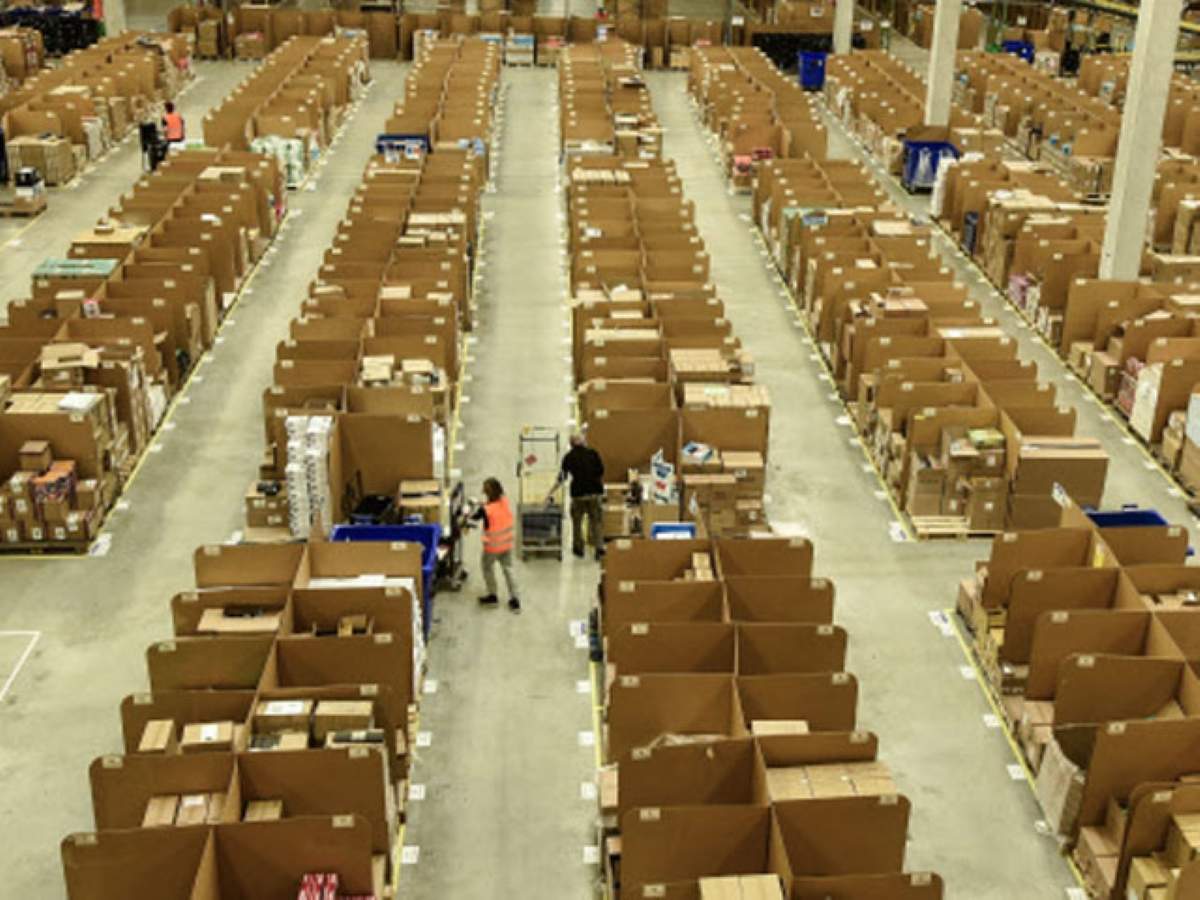 Seattle: Two months ago, Amazon.com Inc halted orders from thousands of suppliers with no explanation. Panic ensued — until the orders quietly resumed weeks later, with Amazon suggesting the pause was part of a campaign to weed out counterfeit products. Suppliers breathed a sigh of relief.Now a larger, more permanent purge is coming that will upend the relationship between the world's largest online retailer and many of its long-time vendors.In the next few months, bulk orders will dry up for thousands of mostly smaller suppliers, according to three people familiar with the plan. Amazon's aim is to cut costs and focus wholesale purchasing on major brands like Procter & Gamble, Sonyand Lego, the people said. That will ensure the company has adequate supplies of must-have merchandise and help it compete with the likes of Walmart, Target and Best Buy.The mom-and-pops that have long relied on Amazon for a steady stream of orders will have to learn a new way of doing business on the web store. Rather than selling in bulk directly to Amazon, they'll need to win sales one shopper at a time. It's one of the biggest shifts in Amazon's ecommerce strategy since it opened the site to independent sellers almost 20 years ago. While the plan could be changed or cancelled, it's currently moving forward, the people said.“This is the kind of change that will scare the living daylights out of brands selling on Amazon,” said James Thomson, who organizes the Prosper Show, an annual e-commerce conference focused on Amazon. “Amazon usually doesn't give a lot of lead time and brands will be left scrambling. If they make this change soon, brands will have until the end of the summer to get their acts together or their holiday quarter will be at risk.”In an email, an Amazon spokeswoman said: “We review our selling partner relationships on an individual basis as part of our normal course of business, and any speculation of a large scale reduction of vendors is incorrect.”
Amazon secures inventory two ways. The company buys products directly from wholesale vendors, reselling them like a traditional retail store, and it lets independent merchants post their own products on the site in a marketplace model similar to EBay Inc. or a consignment shop. About half of the goods sold on Amazon come from independent merchants, and the change will push the marketplace share of revenue even higher.The vendor purge is the latest step in Amazon's “hands off the wheel” initiative, an effort to keep expanding product selection on its website without spending more money on managers to oversee it all. The project entails automating tasks like forecasting demand and negotiating prices which were predominantly done by Amazon employees. It also involves pushing more Amazon suppliers to sell goods themselves so Amazon doesn't have to pay people to do it for them.There’s another upside for Amazon. By forcing many existing wholesale vendors to sell directly to consumers, the company holds less inventory itself — reducing the risk that it gets stuck with unsold merchandise. Moreover, Amazon can collect a commission on each sale a vendor makes and charge them fees to store, pack and deliver their goods — boosting profits.Generally speaking, vendors selling less than $10 million in products each year on the site will no longer get wholesale orders from Amazon, although that will vary by category, said the people, who requested anonymity to speak about an internal matter.
Seattle: Two months ago, Amazon.com Inc halted orders from thousands of suppliers with no explanation. Panic ensued — until the orders quietly resumed weeks later, with Amazon suggesting the pause was part of a campaign to weed out counterfeit products. Suppliers breathed a sigh of relief.Now a larger, more permanent purge is coming that will upend the relationship between the world's largest online retailer and many of its long-time vendors.In the next few months, bulk orders will dry up for thousands of mostly smaller suppliers, according to three people familiar with the plan. Amazon's aim is to cut costs and focus wholesale purchasing on major brands like Procter & Gamble, Sonyand Lego, the people said. That will ensure the company has adequate supplies of must-have merchandise and help it compete with the likes of Walmart, Target and Best Buy.The mom-and-pops that have long relied on Amazon for a steady stream of orders will have to learn a new way of doing business on the web store. Rather than selling in bulk directly to Amazon, they'll need to win sales one shopper at a time. It's one of the biggest shifts in Amazon's ecommerce strategy since it opened the site to independent sellers almost 20 years ago. While the plan could be changed or cancelled, it's currently moving forward, the people said.“This is the kind of change that will scare the living daylights out of brands selling on Amazon,” said James Thomson, who organizes the Prosper Show, an annual e-commerce conference focused on Amazon. “Amazon usually doesn't give a lot of lead time and brands will be left scrambling. If they make this change soon, brands will have until the end of the summer to get their acts together or their holiday quarter will be at risk.”In an email, an Amazon spokeswoman said: “We review our selling partner relationships on an individual basis as part of our normal course of business, and any speculation of a large scale reduction of vendors is incorrect.”
Amazon secures inventory two ways. The company buys products directly from wholesale vendors, reselling them like a traditional retail store, and it lets independent merchants post their own products on the site in a marketplace model similar to EBay Inc. or a consignment shop. About half of the goods sold on Amazon come from independent merchants, and the change will push the marketplace share of revenue even higher.The vendor purge is the latest step in Amazon's “hands off the wheel” initiative, an effort to keep expanding product selection on its website without spending more money on managers to oversee it all. The project entails automating tasks like forecasting demand and negotiating prices which were predominantly done by Amazon employees. It also involves pushing more Amazon suppliers to sell goods themselves so Amazon doesn't have to pay people to do it for them.There’s another upside for Amazon. By forcing many existing wholesale vendors to sell directly to consumers, the company holds less inventory itself — reducing the risk that it gets stuck with unsold merchandise. Moreover, Amazon can collect a commission on each sale a vendor makes and charge them fees to store, pack and deliver their goods — boosting profits.Generally speaking, vendors selling less than $10 million in products each year on the site will no longer get wholesale orders from Amazon, although that will vary by category, said the people, who requested anonymity to speak about an internal matter.
 Bengaluru: The Delhi High Court has asked for clarifications from the Reserve Bank of India and Paytm on how the digital payments company is allegedly offering a credit product when it isn’t allowed to operate as a payments bank.The notices were issued by Chief Justice Rajendra Menon and Justice Brijesh Sethi on a petition filed by economist Abhijit Mishra, as reported by the PTI.The petitioner alleged that Paytm’s Postpaid product, offered to its wallet users, contravened central bank norms for payment banks, which state that they cannot extend loans or credit facilities to consumers.The petitioner sought punitive measures against Paytm Payments Bank in this regard. Emails sent to the RBI and Paytm Payments Bank went unanswered till the time of going to press.Paytm launched its Postpaid product in early 2019, offering select consumers a spending limit and time till the following month to pay the amount.
“The problem is that it looks as if the credit amount sits in the books of Paytm whereas in this case, it is with a partner lender (a bank or an NBFC),” said a senior banker aware of the matter.Paytm, backed by SoftBank and Alibaba, spelt out on its website that credit is offered by ICICI Bank for Paytm customers and that it only acts as a facilitator for the service.“The sole discretion to approve Paytm Postpaid rests with ICICI Bank. The decision by ICICI Bank is based on parameters such as transaction history on Paytm, user’s credit history and ICICI Bank’s internal policies,” Paytm said in the frequently asked questions segment.
Bengaluru: The Delhi High Court has asked for clarifications from the Reserve Bank of India and Paytm on how the digital payments company is allegedly offering a credit product when it isn’t allowed to operate as a payments bank.The notices were issued by Chief Justice Rajendra Menon and Justice Brijesh Sethi on a petition filed by economist Abhijit Mishra, as reported by the PTI.The petitioner alleged that Paytm’s Postpaid product, offered to its wallet users, contravened central bank norms for payment banks, which state that they cannot extend loans or credit facilities to consumers.The petitioner sought punitive measures against Paytm Payments Bank in this regard. Emails sent to the RBI and Paytm Payments Bank went unanswered till the time of going to press.Paytm launched its Postpaid product in early 2019, offering select consumers a spending limit and time till the following month to pay the amount.
“The problem is that it looks as if the credit amount sits in the books of Paytm whereas in this case, it is with a partner lender (a bank or an NBFC),” said a senior banker aware of the matter.Paytm, backed by SoftBank and Alibaba, spelt out on its website that credit is offered by ICICI Bank for Paytm customers and that it only acts as a facilitator for the service.“The sole discretion to approve Paytm Postpaid rests with ICICI Bank. The decision by ICICI Bank is based on parameters such as transaction history on Paytm, user’s credit history and ICICI Bank’s internal policies,” Paytm said in the frequently asked questions segment.
 BENGALURU: For its ambitious target of reaching 40 billion digital transactions in the financial year ending in March 2020, ministry of electronics and information technology (MeitY) has asked about 7.7 billion of such transactions to come from SBI. Additionally, SoftBank and Alibaba-backed Paytm has been given a target of 5 billion transactions through its payments bank and popular mobile wallet. Private sector lenders HDFC Bank and ICICI Bank are expected to chip in with about 2.5 billion and 2.8 billion transactions respectively, according to four people aware of this mandate given to banks and payments platforms. For the financial year ended March 2019, the target was of about 30 billion digital transactions, of which 90-95% was met, these people said.
 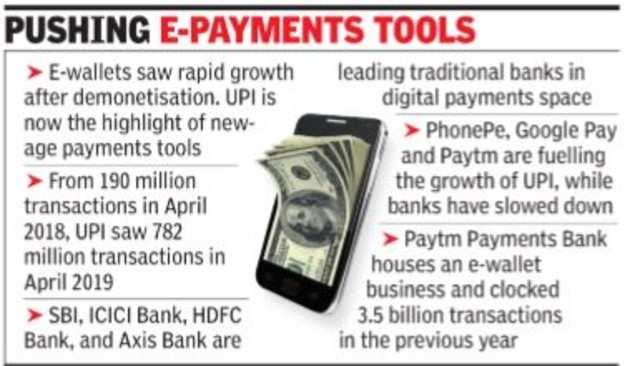 As the Modi-led government comes back to power with a bigger mandate than in 2014, it is looking to double down on growth in digital payments and its mass adoption. While banks will play a critical role for digital payments to soar further, mobile wallets and the Unified Payments Interface (UPI) are key instruments for the success of digital
“There are new options being considered to take UPI to the masses. If a player like WhatsApp gets the final nod for a full-scale rollout, it would change the way peer-to-peer payments are done,” a person aware of the goings-on said.Among the leading institutions, Paytm is the only entity that has traditionally not been a bank but has one of the largest consumer bases. Other major players in the UPI space, which include Google Pay and Flipkart-owned PhonePe, work with banks to offer the service. To push digital payments, regulatory bodies like the RBI, IRDAI and Sebi are set to come up with regulatory sandboxes to work and test new technologies in the market. While the targets were allocated before the elections, once the swearing-in of new ministers takes place, things will further accelerate, one of the persons aware of the government’s thinking added.Emails sent to the banks, MeitY and Paytm did not elicit any response on the matter. Sources said the estimates are ambitious but achievable as UPI adoption is stronger now and it has emerged as a leading choice of digital payments among top-tier internet users in the metro cities. “Focus on digital payments will only accelerate going forward. It also brings transparency and makes the economy formalised,” said Ankur Pahwa, partner and national leader (e-commerce and consumer internet), EY India. He added UPI will continue to lead the digital payments stack in India. The digital payments estimate covers card-based payments, immediate payment service (IMPS), digital wallets, UPI, national automated clearing house (NACH) and Aadhaar-enabled payment system (AePS). UPI, in the last one year, has seen mercurial growth and it continues to grow even on a higher base now. In March, it saw 800 million transactions through its network even though it saw a marginal dip in volumes at almost 782 million transactions in April.
As the Modi-led government comes back to power with a bigger mandate than in 2014, it is looking to double down on growth in digital payments and its mass adoption. While banks will play a critical role for digital payments to soar further, mobile wallets and the Unified Payments Interface (UPI) are key instruments for the success of digital
“There are new options being considered to take UPI to the masses. If a player like WhatsApp gets the final nod for a full-scale rollout, it would change the way peer-to-peer payments are done,” a person aware of the goings-on said.Among the leading institutions, Paytm is the only entity that has traditionally not been a bank but has one of the largest consumer bases. Other major players in the UPI space, which include Google Pay and Flipkart-owned PhonePe, work with banks to offer the service. To push digital payments, regulatory bodies like the RBI, IRDAI and Sebi are set to come up with regulatory sandboxes to work and test new technologies in the market. While the targets were allocated before the elections, once the swearing-in of new ministers takes place, things will further accelerate, one of the persons aware of the government’s thinking added.Emails sent to the banks, MeitY and Paytm did not elicit any response on the matter. Sources said the estimates are ambitious but achievable as UPI adoption is stronger now and it has emerged as a leading choice of digital payments among top-tier internet users in the metro cities. “Focus on digital payments will only accelerate going forward. It also brings transparency and makes the economy formalised,” said Ankur Pahwa, partner and national leader (e-commerce and consumer internet), EY India. He added UPI will continue to lead the digital payments stack in India. The digital payments estimate covers card-based payments, immediate payment service (IMPS), digital wallets, UPI, national automated clearing house (NACH) and Aadhaar-enabled payment system (AePS). UPI, in the last one year, has seen mercurial growth and it continues to grow even on a higher base now. In March, it saw 800 million transactions through its network even though it saw a marginal dip in volumes at almost 782 million transactions in April.
