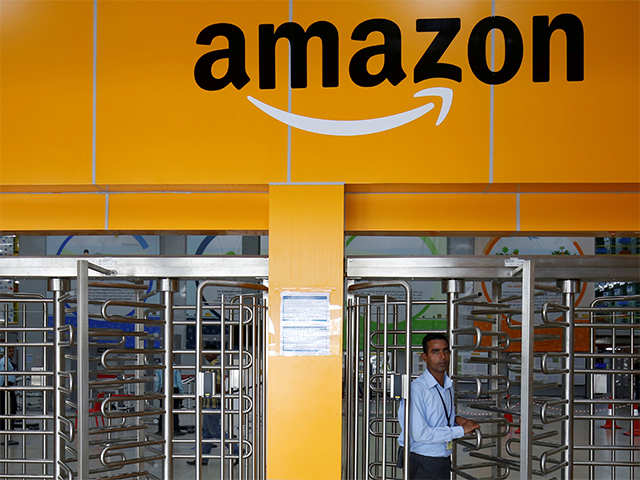
 By Nandita BoseWASHINGTON - Amazon.com Inc's planned second headquarters in northern Virginia cleared a key test on Saturday when local officials approved a proposed financial package worth an estimated $51 million amid a small but vocal opposition. Amazon in November picked National Landing, a site jointly owned by Arlington County and the city of Alexandria, just outside Washington, along with New York Cityfor its so-called HQ2 or second headquarters. That followed a year-long search in which hundreds of municipalities, ranging from Newark, New Jersey, to Indianapolis, competed for the coveted tax-dollars and high-wage jobs the project promises. Amazon in February abruptly scrapped plans to build part of its second headquarters in the New York borough of Queens after opposition from local leaders angered by incentives promised by state and city politicians.The five-member Arlington County Board voted 5-0 in favor of Amazon receiving the financial package after a seven-hour meeting held in a room filled with up to about 150 citizens and representatives from local unions and minority advocacy groups. There was strong opposition from some residents and labor groups, many of whom chanted "shame" and waved signs with slogans including "Don't be the opposite of Robinhood," "Amazon overworks and underpays," and "Advocate for us and not Amazon." One protester was escorted out of the meeting by police. A few dozen protesters outside the county office chanted, "The people united will never be defeated." Danny Candejas, an organizer for the coalition "For Us, Not Amazon," which opposes the company's move into the area, said: "We are fighting to make sure people who live here are not priced out by wealthy people." Some supporters in the meeting held up signs saying 'vote yes' and 'Amazon is prime for Arlington'. One hundred and twelve people were registered to speak, an unusually high number for a local county meeting, forcing board chair Christian Dorsey to cut the talking minutes to two minutes, from three, for every regular speaker, and to four minutes, from five, for representatives of organizations.Many speakers who were opposed to the Amazon headquarters especially opposed direct incentives, citing rising housing costs, the likely displacement of low-income families, accelerated wage theft for construction workers, and lack of investment guarantees in affordable housing funds."Speculators are already driving up home prices, landlords are raising rents and general contractors are raising their quotes for home improvement projects," said one resident, Hunter Tamarro.
Unions including the AFL-CIO objected to Amazon not signing a project labor agreement with wage and benefit safeguards for workers hired to construct the new buildings.But supporters such as resident June O'Connell said Amazon's presence would ensure Arlington is allocated state funds for investments in transportation and higher education. "I want that money from the state," O'Connell said. "Without Amazon, we wouldn't get a penny of it."Holly Sullivan, Amazon's worldwide head of economic development, spoke briefly and said the company will invest approximately $2.5 billion, create more than 25,000 jobs with an average wage of over $150,000, which will generate more than $3.2 billion in tax revenue. "Regarding incentives, Amazon is only eligible for the financial incentive after we make our investments and occupy office space in the community," she said.Dorsey, the board chair, had said before the vote that he expected the measure to pass. He said that rejecting Amazon would not solve the community's problems and concerns, and that this was the first deal the county has struck where new revenue growth will be used to fund it.To be sure, the vote approved an estimated $51 million, a fraction of the $481 million promised by the county. Only 5 percent of the incentives are direct. Also, Amazon has been offered a $750 million package by the state that the Virginia General Assembly approved with little opposition.The $51 million includes a controversial direct financial incentive or cash grant of $23 million to Amazon over 15 years, which will be collected from taxes on Arlington hotel rooms. The grant is contingent upon Amazon occupying six million square feet of office space over the first 16 years.Arlington has also offered to invest about $28 million over 10 years of future property tax revenue in onsite infrastructure and open space at the headquarters site. A filing on the county board's website says the $23 million grant and the $28 million in strategic public infrastructure investments were "instrumental in Amazon choosing Arlington for its headquarters."
By Nandita BoseWASHINGTON - Amazon.com Inc's planned second headquarters in northern Virginia cleared a key test on Saturday when local officials approved a proposed financial package worth an estimated $51 million amid a small but vocal opposition. Amazon in November picked National Landing, a site jointly owned by Arlington County and the city of Alexandria, just outside Washington, along with New York Cityfor its so-called HQ2 or second headquarters. That followed a year-long search in which hundreds of municipalities, ranging from Newark, New Jersey, to Indianapolis, competed for the coveted tax-dollars and high-wage jobs the project promises. Amazon in February abruptly scrapped plans to build part of its second headquarters in the New York borough of Queens after opposition from local leaders angered by incentives promised by state and city politicians.The five-member Arlington County Board voted 5-0 in favor of Amazon receiving the financial package after a seven-hour meeting held in a room filled with up to about 150 citizens and representatives from local unions and minority advocacy groups. There was strong opposition from some residents and labor groups, many of whom chanted "shame" and waved signs with slogans including "Don't be the opposite of Robinhood," "Amazon overworks and underpays," and "Advocate for us and not Amazon." One protester was escorted out of the meeting by police. A few dozen protesters outside the county office chanted, "The people united will never be defeated." Danny Candejas, an organizer for the coalition "For Us, Not Amazon," which opposes the company's move into the area, said: "We are fighting to make sure people who live here are not priced out by wealthy people." Some supporters in the meeting held up signs saying 'vote yes' and 'Amazon is prime for Arlington'. One hundred and twelve people were registered to speak, an unusually high number for a local county meeting, forcing board chair Christian Dorsey to cut the talking minutes to two minutes, from three, for every regular speaker, and to four minutes, from five, for representatives of organizations.Many speakers who were opposed to the Amazon headquarters especially opposed direct incentives, citing rising housing costs, the likely displacement of low-income families, accelerated wage theft for construction workers, and lack of investment guarantees in affordable housing funds."Speculators are already driving up home prices, landlords are raising rents and general contractors are raising their quotes for home improvement projects," said one resident, Hunter Tamarro.
Unions including the AFL-CIO objected to Amazon not signing a project labor agreement with wage and benefit safeguards for workers hired to construct the new buildings.But supporters such as resident June O'Connell said Amazon's presence would ensure Arlington is allocated state funds for investments in transportation and higher education. "I want that money from the state," O'Connell said. "Without Amazon, we wouldn't get a penny of it."Holly Sullivan, Amazon's worldwide head of economic development, spoke briefly and said the company will invest approximately $2.5 billion, create more than 25,000 jobs with an average wage of over $150,000, which will generate more than $3.2 billion in tax revenue. "Regarding incentives, Amazon is only eligible for the financial incentive after we make our investments and occupy office space in the community," she said.Dorsey, the board chair, had said before the vote that he expected the measure to pass. He said that rejecting Amazon would not solve the community's problems and concerns, and that this was the first deal the county has struck where new revenue growth will be used to fund it.To be sure, the vote approved an estimated $51 million, a fraction of the $481 million promised by the county. Only 5 percent of the incentives are direct. Also, Amazon has been offered a $750 million package by the state that the Virginia General Assembly approved with little opposition.The $51 million includes a controversial direct financial incentive or cash grant of $23 million to Amazon over 15 years, which will be collected from taxes on Arlington hotel rooms. The grant is contingent upon Amazon occupying six million square feet of office space over the first 16 years.Arlington has also offered to invest about $28 million over 10 years of future property tax revenue in onsite infrastructure and open space at the headquarters site. A filing on the county board's website says the $23 million grant and the $28 million in strategic public infrastructure investments were "instrumental in Amazon choosing Arlington for its headquarters."
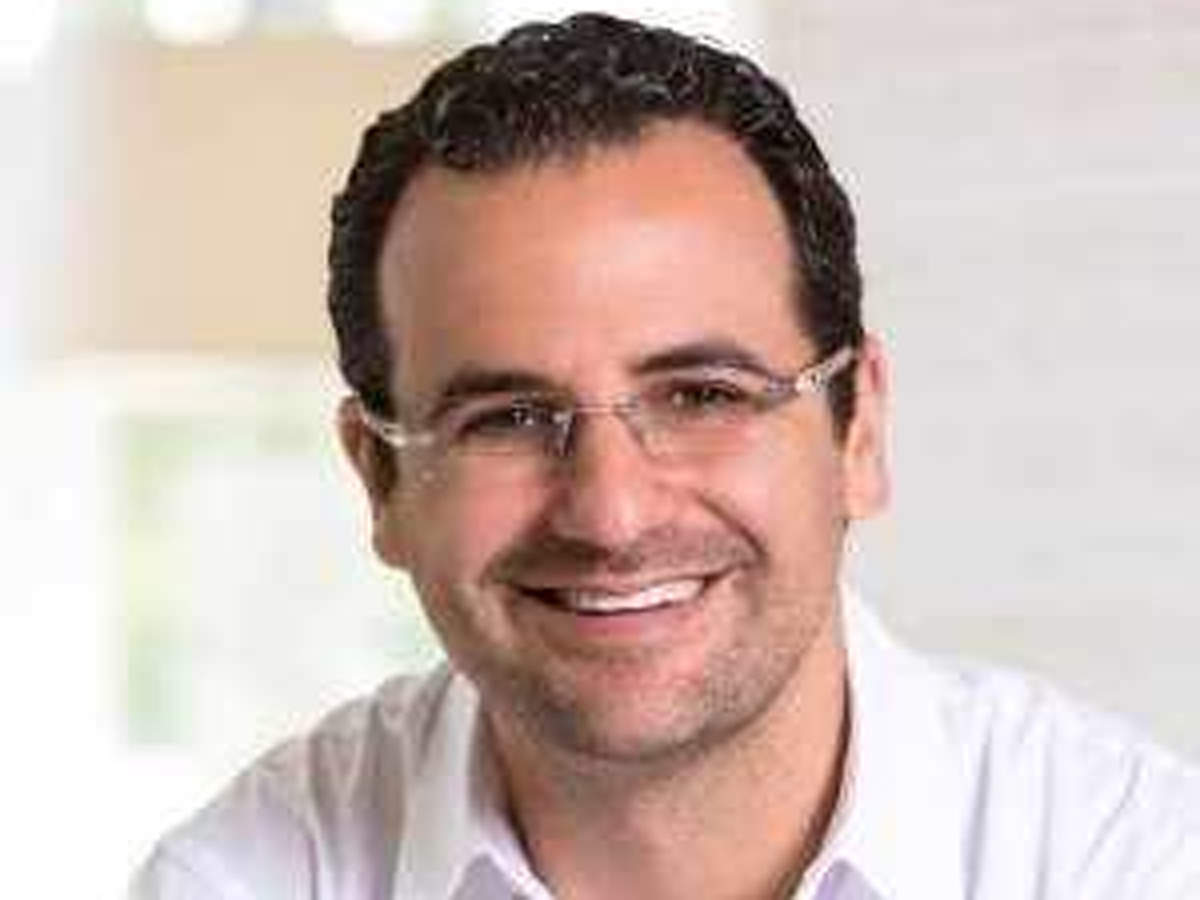 BENGALURU | NEW DELHI: Lee Fixel, the secretive American investor, best known in India as the man who powered the rise of ecommerce giant Flipkart, is poised to return to his old hunting grounds in a new avatar, said several members of the country’s startup fraternity who are directly aware of his plans.
On Thursday, Tiger Global, the New York-based investment firm where Fixel has worked for over 13 years, said the technology investor would leave the firm on June 30.
Fixel was responsible for scaling up the hedge fund’s private market portfolio which now constitutes half of the fund’s $26 billion assets under management. In a letter to its limited partners, or sponsors of the fund, the firm said: “Lee expects to actively invest his own capital and may start an investment firm in the future.”
“He is likely to make a comeback scouting for early and growth-stage technology investments in India, Bay Area and South East Asia via his own fund,” four people in the know of his plans told ET. “His understanding, network and reputation across these geographies are strong, and he will soon separately raise capital for his fund,” said one of the persons.
Fixel, who is estimated to be armed with a personal capital of $800 million to $1 billion, “began informing a select group of founders from Tiger Global’s Indian portfolio (of his impending exit from the firm) a week ago,” the sources said.
“He had earlier asked them to scout for bets in healthcare and fintech sectors,” the sources added.
The 39-year-old is credited with backing some of the world’s most stellar startups like Spotify and Stripe, in addition to single-handedly crafting Tiger Global’s Indian portfolio, beginning with early investments in Just Dial, MakeMyTrip and later, Flipkart cofounded by Sachin Bansal and Binny Bansal.
“I would say he is the pioneer who single handedly put the Indian startup scene on the global map,” said Binny Bansal.
“When Lee started investing in India not many global VCs looked at India favourably and even if some did, the consumer internet space was certainly not top of mind. Lee helped change that, with his long-term investments in Flipkart, Myntra, Ola, and MakeMyTrip among others,” he said.
Famously qualified as the ‘Maharaja’ (King) of Indian ecommerce, Fixel was the most important investor in Flipkart, working through close aide Kalyan Krishnamurthy, the present group CEO at the etailing major.
BENGALURU | NEW DELHI: Lee Fixel, the secretive American investor, best known in India as the man who powered the rise of ecommerce giant Flipkart, is poised to return to his old hunting grounds in a new avatar, said several members of the country’s startup fraternity who are directly aware of his plans.
On Thursday, Tiger Global, the New York-based investment firm where Fixel has worked for over 13 years, said the technology investor would leave the firm on June 30.
Fixel was responsible for scaling up the hedge fund’s private market portfolio which now constitutes half of the fund’s $26 billion assets under management. In a letter to its limited partners, or sponsors of the fund, the firm said: “Lee expects to actively invest his own capital and may start an investment firm in the future.”
“He is likely to make a comeback scouting for early and growth-stage technology investments in India, Bay Area and South East Asia via his own fund,” four people in the know of his plans told ET. “His understanding, network and reputation across these geographies are strong, and he will soon separately raise capital for his fund,” said one of the persons.
Fixel, who is estimated to be armed with a personal capital of $800 million to $1 billion, “began informing a select group of founders from Tiger Global’s Indian portfolio (of his impending exit from the firm) a week ago,” the sources said.
“He had earlier asked them to scout for bets in healthcare and fintech sectors,” the sources added.
The 39-year-old is credited with backing some of the world’s most stellar startups like Spotify and Stripe, in addition to single-handedly crafting Tiger Global’s Indian portfolio, beginning with early investments in Just Dial, MakeMyTrip and later, Flipkart cofounded by Sachin Bansal and Binny Bansal.
“I would say he is the pioneer who single handedly put the Indian startup scene on the global map,” said Binny Bansal.
“When Lee started investing in India not many global VCs looked at India favourably and even if some did, the consumer internet space was certainly not top of mind. Lee helped change that, with his long-term investments in Flipkart, Myntra, Ola, and MakeMyTrip among others,” he said.
Famously qualified as the ‘Maharaja’ (King) of Indian ecommerce, Fixel was the most important investor in Flipkart, working through close aide Kalyan Krishnamurthy, the present group CEO at the etailing major.
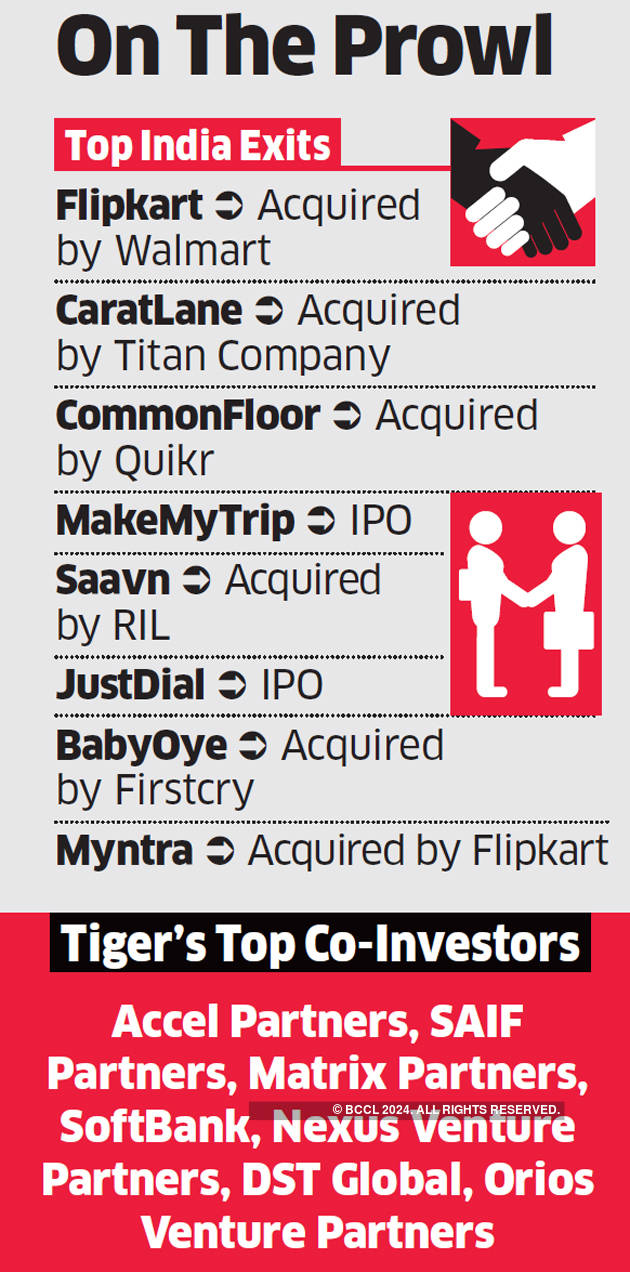 The reticent fund manager went on to orchestrate Flipkart’s sale to US retail giant Walmart for $16 billion in May last year.
“(Fixel) will continue to be on the board of Flipkart Group. We have immensely benefited from his vision, insights and global credibility for several years and we look forward to his continued engagement,” said Krishnamurthy.
Fixel’s bullishness on India was fuelled by the exponential growth of Chinese ecommerce and Tiger Global’s backing of JD.com in 2009, an investment which is considered the most successful for Tiger after the etailer went for a $25-billion IPO in 2014.
Along with his then colleague Feroze Dewan, Fixel started Tiger’s operations in India, possibly looking for a beachhead in the “next China”. This led to Fixel’s wager on Flipkart. In a few years, he had emerged as one of the most soughtafter tech investors locally, credited for the funding boom of 2014-15, a move for which he also drew criticism for driving up valuations of young startups.
Fixel hit a pause button as things also started to look down for Flipkart. By 2016, he had pumped more than $1 billion in Flipkart with no exit in sight, which also meant that India started taking a backseat for the fund. From striking around 40 new investments in India in 2015, Tiger Global came down to laying zero bets in 2016.
The reticent fund manager went on to orchestrate Flipkart’s sale to US retail giant Walmart for $16 billion in May last year.
“(Fixel) will continue to be on the board of Flipkart Group. We have immensely benefited from his vision, insights and global credibility for several years and we look forward to his continued engagement,” said Krishnamurthy.
Fixel’s bullishness on India was fuelled by the exponential growth of Chinese ecommerce and Tiger Global’s backing of JD.com in 2009, an investment which is considered the most successful for Tiger after the etailer went for a $25-billion IPO in 2014.
Along with his then colleague Feroze Dewan, Fixel started Tiger’s operations in India, possibly looking for a beachhead in the “next China”. This led to Fixel’s wager on Flipkart. In a few years, he had emerged as one of the most soughtafter tech investors locally, credited for the funding boom of 2014-15, a move for which he also drew criticism for driving up valuations of young startups.
Fixel hit a pause button as things also started to look down for Flipkart. By 2016, he had pumped more than $1 billion in Flipkart with no exit in sight, which also meant that India started taking a backseat for the fund. From striking around 40 new investments in India in 2015, Tiger Global came down to laying zero bets in 2016.
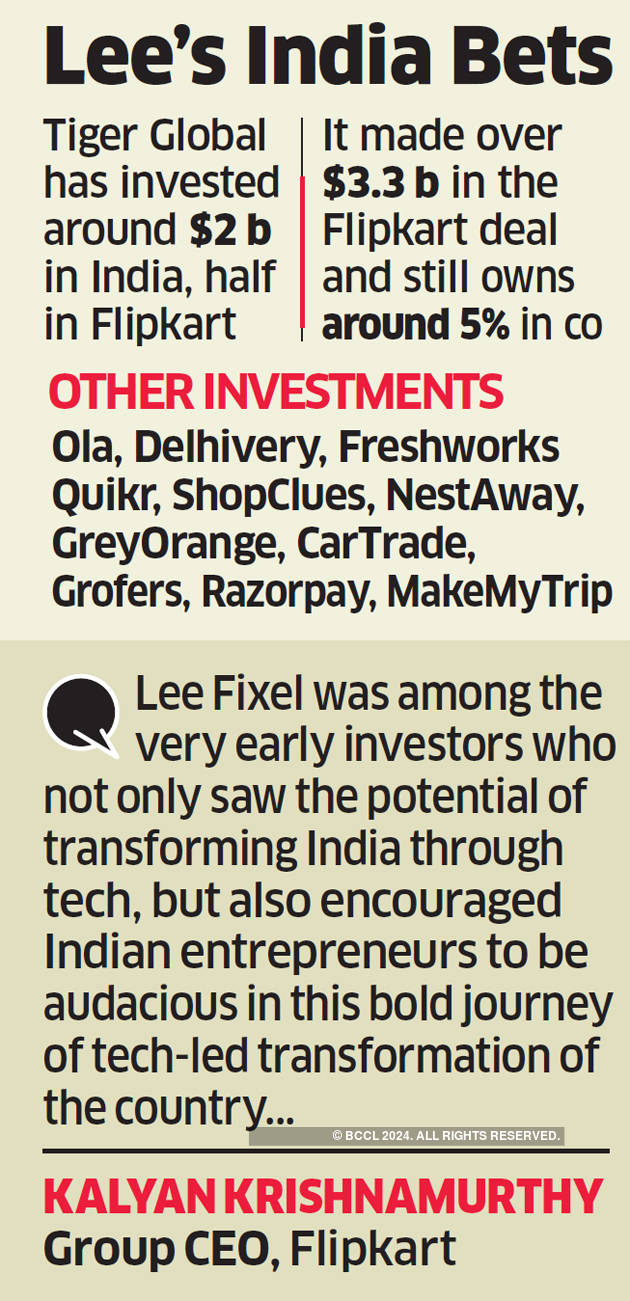 After almost three years, Tiger Global renewed its focus on the country with its mega $3.75 billion Private Investment Partners XI fund, with India as one of the focus areas. This came on the back of Flipkart’s acquisition by Walmart.
Indian entrepreneurs who have worked with him speak highly of his venture investing skills. “Lee works very differently. He never demands that we have board meetings every quarter to update him. If he needed to be updated, a call or even WhatsApp messages often sufficed,” said Harshil Mathur, chief executive of RazorPay.
Startup investors for their part credit him with having “caused a huge mindshift change in India”.
“He has been a VC in the true sense of the term, having always been willing to place adventurous bets. Before him, everyone was taking very conservative bets,” said Rehan Yar Khan, partner at Orios Venture Partners.
Fixel will continue to assist in the management and serve on boards of certain existing portfolio companies but will not be an active part of Tiger Global’s investment team beyond PIP XI.
Scott Shleifer and Chase Coleman will continue as co-portfolio managers of Tiger’s private equity business, and Shleifer will become the head of private equity.
“They’ve (Tiger) been slow anyhow over the last few years focusing more on follow-ons... If Fixel builds a new avatar, he will likely come back,” said Karthik Reddy, partner at Blume Ventures.
More recently, on the philanthropy front, the Lauren and Lee Fixel Family Foundation gifted $20 million to the University of Florida and UF Health that will be used to establish the Norman Fixel Institute for Neurological Diseases at UF Health, an institute focused on advancing research, technological innovation and clinical care for Parkinson’s disease and other neurodegenerative diseases, including Alzheimer’s, Lewy body, ALS, dystonia and concussions.
After almost three years, Tiger Global renewed its focus on the country with its mega $3.75 billion Private Investment Partners XI fund, with India as one of the focus areas. This came on the back of Flipkart’s acquisition by Walmart.
Indian entrepreneurs who have worked with him speak highly of his venture investing skills. “Lee works very differently. He never demands that we have board meetings every quarter to update him. If he needed to be updated, a call or even WhatsApp messages often sufficed,” said Harshil Mathur, chief executive of RazorPay.
Startup investors for their part credit him with having “caused a huge mindshift change in India”.
“He has been a VC in the true sense of the term, having always been willing to place adventurous bets. Before him, everyone was taking very conservative bets,” said Rehan Yar Khan, partner at Orios Venture Partners.
Fixel will continue to assist in the management and serve on boards of certain existing portfolio companies but will not be an active part of Tiger Global’s investment team beyond PIP XI.
Scott Shleifer and Chase Coleman will continue as co-portfolio managers of Tiger’s private equity business, and Shleifer will become the head of private equity.
“They’ve (Tiger) been slow anyhow over the last few years focusing more on follow-ons... If Fixel builds a new avatar, he will likely come back,” said Karthik Reddy, partner at Blume Ventures.
More recently, on the philanthropy front, the Lauren and Lee Fixel Family Foundation gifted $20 million to the University of Florida and UF Health that will be used to establish the Norman Fixel Institute for Neurological Diseases at UF Health, an institute focused on advancing research, technological innovation and clinical care for Parkinson’s disease and other neurodegenerative diseases, including Alzheimer’s, Lewy body, ALS, dystonia and concussions.
 The gradual maturing of the ecommerce and startup ecosystem, lower attrition and a decline in overall salary increase budgets are likely to pull down average salary increments at such companies in the country this appraisal cycle, top consulting firms say.Compensation experts Aon, Willis Towers Watson and Mercer estimate average hikes at India’s ecommerce and startup companies in 2019 to be between 9.5 and 11.5%, a significant step down from the sector’s heydays. There is a silver lining though: companies will continue to reward high performers, rainmakers, and critical technology and product talent disproportionately as they use their salary budgets differently to retain talent in specific skill areas such as digital, analytics, big data and cloud computing.Some companies such as Cashkaro said they are willing to give hikes of even 100% to exceptional performers while others will reward them with employee stock options (ESOPs), bonuses, and rapid career advancement.
“This is the natural course of maturity /stability for any industry,” Anandorup Ghose, emerging markets head at Aon, said. “There is initially a lot of growth in business and in pay, etc., fuelled by investor money and so on, and then the focus gradually shifts towards returns and profitability. Companies reflect that in managing compensation costs as well. Ecommerce is going through the same cycle.” However, top performers will get much better hikes. “Differentiation between an average performer and a top performer continues to be around 2.2X which is the highest in India,” Ghose said.Aon expects average pay hike in the ecommerce and startup industry to be 9.5% in 2009, down from 9.8% last year, while high fliers can expect more than 20% hikes. Wills Towers Watson said year-onyear increases have seen a southward trend from a high of about 15% in 2014-15 and 2015-16 to about 10-11% now. At the same time, employers are setting aside 35-40% of their budgets for top performers, said Arvind Usretay, director, rewards, at Willis Towers Watson India.“Ecommerce players are fine-tuning the salary increment budgets to balance the increasing demand to hire, manage and retain hot skills from the market, where increases may range up to 20% for top performers,” Usretay said. Experts attribute the slide in average increments to maturing of ecommerce businesses that has helped stabilise attrition. Further consolidation is expected in the market, leading to a more stable environment in salary increments, they said. With each round of VC funds getting more difficult to secure, and companies under pressure to ensure ‘sustainable growth’, increments are showing a more stabilised level, said Mansee Singhal, senior principal — rewards, and consulting leader for high-tech, mobility, at Mercer.However, the multiplier of average to top performer could be up to 1.8x of average increment, she said. While several companies, including Flipkart, OLX, Droom and Urban Ladder, did not share information, others said key employees would continue to be rewarded handsomely, especially given the scarcity of top talent and niche skills.At India’s largest cashback and coupons site, Cashkaro, individuals who have outperformed their peers may receive hikes of up to 100%, especially if they are in the initial stages of their career, its cofounder and CEO Swati Bhargava said. Then there are ESOPs and high-performance bonuses as well to those driving growth, she said. Paisabazaar.com and Bankbazaar. com said they are still in the process of finalising increments. “I believe this year will be similar to last year,” said Sriram V, chief HR officer at Bankbazaar.com. “But the difference will be sharper between high performance and others. Also, niche skills will be distinguished separately.”Naveen Kukreja, CEO at Paisabazaar. com, said that the company would give out stock options to top talent and critical talent like it did last year. “We would look at giving out ESOPs to tech talent, talent in AI and ML at senior levels, mostly senior VPs and above,” he said. Online grocer BigBasket said it has a philosophy of recruiting people who can punch above their weight in every function. “On an average, both last and this year, those that met expectations got, or would get to see, anywhere between 8% to 10% increase,” said Tanuja Tewari, general manager-HR at BigBasket. “The increase for top performers would be competitive as per Industry standards. There would be some exceptional individuals who delivered outstanding performance despite being relatively undersized for a role who would receive a much higher increase.”
The gradual maturing of the ecommerce and startup ecosystem, lower attrition and a decline in overall salary increase budgets are likely to pull down average salary increments at such companies in the country this appraisal cycle, top consulting firms say.Compensation experts Aon, Willis Towers Watson and Mercer estimate average hikes at India’s ecommerce and startup companies in 2019 to be between 9.5 and 11.5%, a significant step down from the sector’s heydays. There is a silver lining though: companies will continue to reward high performers, rainmakers, and critical technology and product talent disproportionately as they use their salary budgets differently to retain talent in specific skill areas such as digital, analytics, big data and cloud computing.Some companies such as Cashkaro said they are willing to give hikes of even 100% to exceptional performers while others will reward them with employee stock options (ESOPs), bonuses, and rapid career advancement.
“This is the natural course of maturity /stability for any industry,” Anandorup Ghose, emerging markets head at Aon, said. “There is initially a lot of growth in business and in pay, etc., fuelled by investor money and so on, and then the focus gradually shifts towards returns and profitability. Companies reflect that in managing compensation costs as well. Ecommerce is going through the same cycle.” However, top performers will get much better hikes. “Differentiation between an average performer and a top performer continues to be around 2.2X which is the highest in India,” Ghose said.Aon expects average pay hike in the ecommerce and startup industry to be 9.5% in 2009, down from 9.8% last year, while high fliers can expect more than 20% hikes. Wills Towers Watson said year-onyear increases have seen a southward trend from a high of about 15% in 2014-15 and 2015-16 to about 10-11% now. At the same time, employers are setting aside 35-40% of their budgets for top performers, said Arvind Usretay, director, rewards, at Willis Towers Watson India.“Ecommerce players are fine-tuning the salary increment budgets to balance the increasing demand to hire, manage and retain hot skills from the market, where increases may range up to 20% for top performers,” Usretay said. Experts attribute the slide in average increments to maturing of ecommerce businesses that has helped stabilise attrition. Further consolidation is expected in the market, leading to a more stable environment in salary increments, they said. With each round of VC funds getting more difficult to secure, and companies under pressure to ensure ‘sustainable growth’, increments are showing a more stabilised level, said Mansee Singhal, senior principal — rewards, and consulting leader for high-tech, mobility, at Mercer.However, the multiplier of average to top performer could be up to 1.8x of average increment, she said. While several companies, including Flipkart, OLX, Droom and Urban Ladder, did not share information, others said key employees would continue to be rewarded handsomely, especially given the scarcity of top talent and niche skills.At India’s largest cashback and coupons site, Cashkaro, individuals who have outperformed their peers may receive hikes of up to 100%, especially if they are in the initial stages of their career, its cofounder and CEO Swati Bhargava said. Then there are ESOPs and high-performance bonuses as well to those driving growth, she said. Paisabazaar.com and Bankbazaar. com said they are still in the process of finalising increments. “I believe this year will be similar to last year,” said Sriram V, chief HR officer at Bankbazaar.com. “But the difference will be sharper between high performance and others. Also, niche skills will be distinguished separately.”Naveen Kukreja, CEO at Paisabazaar. com, said that the company would give out stock options to top talent and critical talent like it did last year. “We would look at giving out ESOPs to tech talent, talent in AI and ML at senior levels, mostly senior VPs and above,” he said. Online grocer BigBasket said it has a philosophy of recruiting people who can punch above their weight in every function. “On an average, both last and this year, those that met expectations got, or would get to see, anywhere between 8% to 10% increase,” said Tanuja Tewari, general manager-HR at BigBasket. “The increase for top performers would be competitive as per Industry standards. There would be some exceptional individuals who delivered outstanding performance despite being relatively undersized for a role who would receive a much higher increase.”
 NEW DELHI: Several homegrown e-commerce companies, including Snapdeal, Shopclues and Fynd, have come together to form a lobby group named The E-Commerce Council of India (TECI).
This comes against the backdrop of the revision in the FDI in e-commerce norms that have impacted business models of e-commerce giants such as Amazon Indiaand Walmart-backed Flipkart. Many companies belonging to TECI have backed the tweaking of the rules as it is expected to provide a level-playing field for homegrown e-commerce players and sellers.
Earlier, poster boys of Indian e-commerce market, Flipkart founder Sachin Bansal and founder of Ola Bhavish Aggarwal, tried bringing together a host of domestic e-commerce companies in a similar manner.
The booming Indian ecommerce market estimated to reach $230 billion by 2028, accounting for 10% of India’s retail, according to a Morgan Stanley report, has spawned several lobby groups, including Confederation of All India Traders (CAIT), All India Online Vendors Association (AIOVA) and Indian Private Equity and Venture Capital Association (IVCA).
Besides policy advocacy, the bodies have lobbied on issues including data privacy, logistics, consumer protection and development of small businesses. TECI members, between themselves, account for more than 7.5 lakh online sellers and service providers, the statement said.
The founding members also include digital-first fashion brands like Bewakoof, Breyaand Rustorange.
NEW DELHI: Several homegrown e-commerce companies, including Snapdeal, Shopclues and Fynd, have come together to form a lobby group named The E-Commerce Council of India (TECI).
This comes against the backdrop of the revision in the FDI in e-commerce norms that have impacted business models of e-commerce giants such as Amazon Indiaand Walmart-backed Flipkart. Many companies belonging to TECI have backed the tweaking of the rules as it is expected to provide a level-playing field for homegrown e-commerce players and sellers.
Earlier, poster boys of Indian e-commerce market, Flipkart founder Sachin Bansal and founder of Ola Bhavish Aggarwal, tried bringing together a host of domestic e-commerce companies in a similar manner.
The booming Indian ecommerce market estimated to reach $230 billion by 2028, accounting for 10% of India’s retail, according to a Morgan Stanley report, has spawned several lobby groups, including Confederation of All India Traders (CAIT), All India Online Vendors Association (AIOVA) and Indian Private Equity and Venture Capital Association (IVCA).
Besides policy advocacy, the bodies have lobbied on issues including data privacy, logistics, consumer protection and development of small businesses. TECI members, between themselves, account for more than 7.5 lakh online sellers and service providers, the statement said.
The founding members also include digital-first fashion brands like Bewakoof, Breyaand Rustorange.
 Lee Fixel, a partner and head of the $13 billion private equity business at Tiger Global, plans to leave the firm on June 30, according to a letter sent to clients on Thursday seen by Reuters.Scott Shleifer and Chase Coleman will continue as co-portfolio managers of Tiger Global's private equity business, with Shleifer to take over as its head, according to the letter.Fixel, who joined Tiger Global in 2006, will invest his own money and "may start an investment firm in the future," Tiger Global wrote in the letter. Lee Fixel was one of the most fervent backers of the Indian consumer internet story having spotted the opportunity more than a decade ago. Flipkart was his biggest bet in the country.
"We are grateful for Lee's innumerable contributions," the letter said. "Lee has been a driving force behind the expansion of Tiger Global's private equity investing activities in the United States and India, and he has distinguished himself as a world-class investor."A spokeswoman for Tiger Global, which manages $26 billion overall, declined to comment. Fixel did not immediately respond to an email seeking comment.
Lee Fixel, a partner and head of the $13 billion private equity business at Tiger Global, plans to leave the firm on June 30, according to a letter sent to clients on Thursday seen by Reuters.Scott Shleifer and Chase Coleman will continue as co-portfolio managers of Tiger Global's private equity business, with Shleifer to take over as its head, according to the letter.Fixel, who joined Tiger Global in 2006, will invest his own money and "may start an investment firm in the future," Tiger Global wrote in the letter. Lee Fixel was one of the most fervent backers of the Indian consumer internet story having spotted the opportunity more than a decade ago. Flipkart was his biggest bet in the country.
"We are grateful for Lee's innumerable contributions," the letter said. "Lee has been a driving force behind the expansion of Tiger Global's private equity investing activities in the United States and India, and he has distinguished himself as a world-class investor."A spokeswoman for Tiger Global, which manages $26 billion overall, declined to comment. Fixel did not immediately respond to an email seeking comment.
