Wednesday, 13 October 2021

Shopify hires Bharati Balakrishnan as India head to push growth


Shopify hires Bharati Balakrishnan as India head to push growthBengaluru: Bharati Balakrishnan has joined Shopify, a platform that enables ecommerce sellers, as its India head, according to a post shared by her on professional networking site LinkedIn on Tuesday. Balakrishnan has had stints at Future Group and Paytm Mall, and was also a former Alibaba India executive.

"We are just getting started in India. I cannot wait to work with our partner and developer ecosystem, to help businesses of all sizes and types build their own stores online, and make commerce better for everyone!," she said in the post.

Balakrishnan's appointment indicates Shopify's plan for India, even as the domestic market continues to see offline businesses increasingly go online in the aftermath of the pandemic.

Headquartered in Canada, Shopify allows ecommerce players—big and small—to set up an online store and sell their products. Globally, the company has witnessed massive adoption from merchants, which are coming to the platform to set up their online stores. As of Oct. 11, the NYSE-listed firm has a market capitalisation of $168.17 billion.

Balakrishnan, who has spent the past 15 years across offline retail and ecommerce, was most recently with Future Group as a senior vice president-digital commerce. She was one of the first hires by Alibaba in India in 2016 and later joined Paytm Mall, the ecommerce arm of Paytm, as its vice president and head of categories in 2018.


70% grocery merchants join e-commerce during festive sale: Flipkart Wholesale


70% grocery merchants join e-commerce during festive sale: Flipkart WholesaleNew Delhi: Digital B2B platform Flipkart Wholesale on Tuesday said the company's grocery member base has increased 30 per cent to over 5 lakh, and 70 per cent of them have adopted e-commerce during the 'Big Billion Days' festive sale event. The firm claimed that kirana merchants coming from cities such as Bhopal, Kota, Lucknow and Zirakpur have clocked in 1.8 times increase in sales.

"The Big Billion Days, which concluded on October 10, 2021, witnessed a 70 per cent e-commerce adoption by kiranas across the country compared to the same period last year.

"Over five lakh kiranas in over 10,000 pin codes across 24 states and Union territories shopped on the platform and through the Flipkart Wholesale Best Price stores during the festive event," the company said in a statement.

The general merchandise category on the platform recorded 124 per cent increase in purchases, followed by grocery that witnessed a 50 per cent rise in demand and Fashion increased by 24 per cent.

"We are elated at the enormous response the festive event has generated. Our technology-first approach at helping small businesses growth has resulted in the increased adoption of e-commerce and accelerated the pace of digitisation.

"The benefits of a more resilient and self-reliant B2B eco-system enabled by digitisation will be felt in the long run," said Adarsh Menon, senior vice-president and head of Flipkart Wholesale.

Along with its banking and financial services partners, the platform claimed to have facilitated credit up to the tune of Rs 165 crore for members across categories during the Big Billion Days. The firm said that it provided interest-free credit through an end-to-end digital process and buy now pay later option to 1.5 lakh kiranas were with credit line ranging from Rs 10,000 to Rs 25 lakh in partnership with banks and fintech lenders.

Inside Amazon’s systematic campaign to boost its private brands in India


Inside Amazon’s systematic campaign to boost its private brands in IndiaNew Delhi: Amazon.com Inc. has been repeatedly accused of knocking off products it sells on its website and of exploiting its vast trove of internal data to promote its own merchandise at the expense of other sellers. The company has denied the accusations.

But thousands of pages of internal Amazon documents examined by Reuters – including emails, strategy papers and business plans – show the company ran a systematic campaign of creating knockoffs and manipulating search results to boost its own product lines in India, one of the company's largest growth markets.

The documents reveal how Amazon's private-brands team in India secretly exploited internal data from Amazon.in to copy products sold by other companies, and then offered them on its platform. The employees also stoked sales of Amazon private-brand products by rigging Amazon's search results so that the company's products would appear, as one 2016 strategy report for India put it, "in the first 2 or three … search results" when customers were shopping on Amazon.in.

Among the victims of the strategy: a popular shirt brand in India, John Miller, which is owned by a company whose chief executive is Kishore Biyani, known as the country's "retail king." Amazon decided to "follow the measurements of" John Miller shirts down to the neck circumference and sleeve length, the document states.

The internal documents also show that Amazon employees studied proprietary data about other brands on Amazon.in, including detailed information about customer returns. The aim: to identify and target goods - described as "reference" or "benchmark" products - and "replicate" them. As part of that effort, the 2016 internal report laid out Amazon's strategy for a brand the company originally created for the Indian market called "Solimo." The Solimo strategy, it said, was simple: "use information from Amazon.in to develop products and then leverage the Amazon.in platform to market these products to our customers."

The Solimo project in India has had international impact: Scores of Solimo-branded health and household products are now offered for sale on Amazon's U.S. website, Amazon.com.

The 2016 document further shows that Amazon employees working on the company's own products, known as private brands or private labels, planned to partner with the manufacturers of the products targeted for copying. That's because they learned that these manufacturers employ "unique processes which impact the end quality of the product."

The document, entitled "India Private Brands Program," states: "It is difficult to develop this expertise across products and hence, to ensure that we are able to fully match quality with our reference product, we decided to only partner with the manufacturers of our reference product." It termed such manufacturer expertise "Tribal Knowledge."

This is the second in a series of stories based on internal Amazon documents that provide a rare, unvarnished look, in the company's own words, into business practices that it has denied for years.

Amazon has been accused before by employees who worked on private-brand products of exploiting proprietary data and manipulating search results to increase sales of the company's own goods.

In sworn testimony before the US Congress in 2020, Amazon founder Jeff Bezos explained that the e-commerce giant prohibits its employees from using the data on individual sellers to help its private-label business. And, in 2019, another Amazon executive testified that the company does not use such data to create its own private-label products or alter its search results to favor them.

But the internal documents seen by Reuters show for the first time that, at least in India, manipulating search results to favor Amazon's own products, as well as copying other sellers' goods, were part of a formal, clandestine strategy at Amazon – and that high-level executives were told about it. The documents show that two executives reviewed the India strategy – senior vice presidents Diego Piacentini, who has since left the company, and Russell Grandinetti, who currently runs Amazon's international consumer business.

In a written response to questions for this report, Amazon said: "As Reuters hasn't shared the documents or their provenance with us, we are unable to confirm the veracity or otherwise of the information and claims as stated. We believe these claims are factually incorrect and unsubstantiated." The company did not elaborate. The statement also did not address questions from Reuters about the evidence in the documents that Amazon employees copied other companies' products for its own brands.

The company said the way it displays search results doesn't favor private-brand products. "We display search results based on relevance to the customer's search query, irrespective of whether such products have private brands offered by sellers or not," Amazon said.

Amazon also said that it "strictly prohibits the use or sharing of non-public, seller-specific data for the benefit of any seller, including sellers of private brands," and that it investigates reports of its employees violating that policy. Piacentini and Grandinetti didn't respond to requests for comment.

The unfiltered insight the documents offer into Amazon's aggressive use of its market power could intensify the legal and regulatory pressure the company is facing in many countries.

Amazon is under investigation in the United States, Europe and India for alleged anti-competitive practices that hurt other businesses. In India, the allegations include unfairly favoring its own branded merchandise. Amazon declined to comment on the investigations.

Jonas Koponen, an antitrust attorney with Linklaters LLP in Brussels, said the Reuters findings on Amazon's practices in India would likely interest the European Commission, which is probing whether the company has used non-public seller data to boost its own retail business. India has cooperation agreements with the United States and the European Commission to exchange information related to enforcement of antitrust laws.

"When any one competition authority is looking into aspects of one of these globally present organizations' behavior, they will certainly be interested in understanding what evidence there is in other parts of the world and the extent to which that evidence relates to the practices that they themselves are investigating," Koponen said.

The documents also support criticism of Amazon laid out by Lina Khan, the new chair of the U.S. Federal Trade Commission, or FTC. Khan published a paper in 2017 that argued that Amazon's private-brand business raised anti-competitive concerns.

"It is third-party sellers who bear the initial costs and uncertainties when introducing new products; by merely spotting them, Amazon gets to sell products only once their success has been tested," she wrote. "The anticompetitive implications here seem clear."

Amazon filed a petition in June with the FTC asking that Khan recuse herself from all matters related to the company because of "her repeated proclamations that Amazon has violated the antitrust laws."

Khan and the FTC didn't respond to requests for comment.

In the first article in this series, Reuters reported in February that Amazon had for years given preferential treatment to a few big sellers on its Indian platform, and used those sellers to circumvent regulations designed to protect the country's small retailers. That report triggered action by India's main financial crime-fighting agency, which sought information and documents from Amazon. In addition, the nation's antitrust watchdog submitted the story as an exhibit in a court battle with Amazon over its investigation into the company's alleged anti-competitive practices. The court rejected Amazon's request to halt the probe.

"We are committed to extending cooperation to all authorities in India and are confident about our compliance," Amazon said in its statement to Reuters.

Like many other retailers, Amazon views its own brands as a major driver of increased profitability. Private-brand products often have higher profit margins than normal retail brands because production and marketing costs can be lower.

An internal email sent by Amazon executive Grandinetti to a group of company executives in December 2018 stated: "We believe that over the next several years, Private Brands will be one of the most important growth and profitability drivers in the Consumer business." Grandinetti added that company executives believed private brands "can achieve 10% penetration" of the company's consumer business worldwide over the next five years.

Introducing Amazon's own brands was especially critical in India. The company began its e-commerce foray there in 2013, and soon recorded millions of dollars in losses, one internal document shows. To make the business "sustainable in the long run," the 2016 Private Brands document notes, Amazon embarked on a strategy centered on introducing its existing private brands, such as AmazonBasics, and new ones tailored to India.

The 2016 document stated a goal: offer Amazon's own goods in 20% to 40% of all product categories on Amazon.in within two years. Amazon would achieve profitability in its private-brand business by "only launching products that will provide more margin than comparable reference brand products."

Amazon predicted private-brand sales would reach nearly $600 million by 2020 in India, according to a 2017 internal business strategy document. "We will be amongst the Top 3 brands in each sub-category that we play in," the document stated.

Whether it achieved that sales goal isn't clear; Amazon doesn't disclose its private-brand sales in India. The company didn't comment on the strategic goals and other details from the documents reported in this article.

An Amazon press release in 2018 revealed just how successful its private-brand business was becoming in India. Celebrating "record sales" during an annual promotion, the release stated, "Amazon Brands saw its best performance ever with 11X jump over last Great Indian Festival."

Today, Amazon.in lists thousands of Amazon-branded offerings – from garbage bags, bed sheets and soap to air conditioners and televisions. According to the website, many are best-sellers.

One key person involved in 2016 with Amazon's private-brand business in India was Amit Nanda, who later became a country director of the program, according to his LinkedIn profile. He holds an MBA from the Indian Institute of Management, Ahmedabad, one of the nation's top business schools. Before joining Amazon in 2014, according to his LinkedIn profile, he worked at Citibank and the Indian arm of consumer-goods giant Unilever.

As Amazon was reviewing its private-brand strategy in India in 2016, Amazon India employees had a meeting with Grandinetti. A longtime Amazon manager, at the time he was in charge of content for Kindle, the company's popular reading device. But Amazon had announced that he would soon lead its international consumer business, including India.

During the meeting, Nanda was assigned various tasks, according to one Amazon document. Among them: The India private brands "business should be large and profitable. Build for scale."

Nanda declined to comment for this story.

'GLANCE VIEWS'

With its population of 1.3 billion people and a growing middle class, India represents a huge and potentially lucrative market for Amazon. But it's also a country where foreign e-commerce players face a complex and protectionist regulatory regime.

The country's brick-and-mortar retailers comprise an important political constituency for Indian Prime Minister Narendra Modi. Concerned that predatory pricing could hurt these merchants, India prohibits foreign e-commerce players from selling most goods directly to consumers, as they do in many other countries. Amazon and other foreign companies are restricted to operating an online marketplace of third-party sellers, with no one vendor allowed to hold an advantage over another. As a result, Amazon sells most of its private brands through other vendors.

In launching its private-brand business, internal documents show how Amazon used its Indian website to gain a clear edge for its own products on the platform. The creation of its Solimo brand offers a case study.

According to the internal documents, the word Solimo is derived from Solimões - the name for the upper stretches of the Amazon River in Brazil.

With the Solimo line, Amazon aimed to offer items that equaled or exceeded the quality of competing brands but were 10% to 15% cheaper, the 2016 Private Brands document shows. Amazon employees studied different product categories, and compared their overall market size with how well those segments were doing on Amazon.in. They then targeted categories such as home furnishings. Amazon found that furnishings was a $2 billion business in India - but its own website's three-month sales in mid-2014 totaled about $1 million.

In its analysis, Amazon used a metric called "glance views" that quantified which products were being viewed by customers on its website. Explaining why it zeroed in on glance views, the 2016 Amazon document noted that monitoring its India website traffic provides "an opportunity to influence interested customers who are actively considering" a purchase in a product category.

Amazon has said some of the data its private-brand teams use in launching products is public – such as the website's rankings of best-selling merchandise. This is how Amazon described the system to a U.S. congressional subcommittee last year: "Like anyone else at Amazon or in the general public, members of these teams can also visit Amazon's product detail pages to learn a product's best seller ranking and read customer reviews and star ratings to assess whether a product is selling well in Amazon's store."

But seven current and former Indian sellers on Amazon.in told Reuters they can't access internal sales data of rival brands offered on the website. Four of the sellers said they can access glance views, but only for their own products. Amazon has access to more data on sellers, including the number of product units shipped and details about customer returns, the 2016 document shows, giving it an advantage in market intelligence.

Amazon's own use of the data to develop and promote its private-brand products "destroys the level playing field," said one current seller, who asked to remain anonymous.

Amazon said in its statement that it "does not give preferential treatment to any seller on its marketplace." The company also said it "identifies selection gaps based on customer preferences at an aggregate level only and shares this information with all sellers."

HOW TO 'REPLICATE' PRODUCTS

Once Amazon's private-brand employees had decided which categories to enter, they reviewed sales and customer-review data on Amazon.in to identify "reference" or "benchmark" brands to "replicate," the 2016 private-brand document showed.

In the case of Solimo, the 2016 document stated that to ensure the brand's goods meet "customer requirements in terms of performance we identify and replicate these reference products." Amazon had no comment on the Solimo project.

Amazon's strategy also called for manufacturers of its private-brand products to use other companies' goods as models to develop samples for pre-production testing.

Among the brands Amazon employees planned to "benchmark," the document states, were American ones – "Old Navy/GAP" men's shirts. The document does not indicate whether the employees followed through.

Gap Inc, which owns the Old Navy and Gap brands, declined to comment.

The rival products Amazon targeted also included other brands popular in India. For pots and pans, a "reference brand" was Prestige, one of India's largest kitchen-equipment companies. For men's shirts, the benchmarks included Peter England and Louis Philippe, both made in India by conglomerate Aditya Birla Group.

Amazon also targeted John Players, a menswear brand then owned by Indian conglomerate ITC Ltd.

Chandru Kalro, managing director of TTK Prestige, which owns the Prestige brand in India, told Reuters, "We have no knowledge of us being a 'reference brand' for Amazon and we don't know what it means to be an Amazon reference brand."

Aditya Birla Group declined to comment. ITC did not respond to a request for comment.

In early 2016, Amazon private-brand employees were internally noting the success of Xessentia, a clothing brand they had launched on Amazon.in in partnership with a seller. The seller owned the brand; Amazon designed the products.

Sales of Xessentia men's business shirts were surging, and in the first quarter of 2016 had become that category's second-most popular brand on the India site after the American brand Arrow, licensed to the Indian company Arvind Fashions. To create the Xessentia line, Amazon had used Louis Philippe as the benchmark brand, because it was "premium and popular," the 2016 document said.

But something was amiss: About one in every 12 Xessentia shirts was being returned in the first quarter of 2016 for sizing issues. More than 350 were returned because customers complained they were too small.

Amazon employees conducted a "deep dive," the 2016 document reports, by poring over a year's worth of data from Amazon.in, including customer complaints and return numbers for Xessentia, Arrow and seven other brands. They found that a brand of men's business shirts in India called John Miller had far outsold Xessentia shirts, despite carrying "a similar" average selling price. John Miller also had about half the rate of customer returns for "quality issues."

The upshot: "Our learning is that our customer is different from the Louis Philippe customer and doesn't prefer this fit," the 2016 document stated. "We concluded to follow the measurements of Business Shirt of John Miller for Xessentia because of wide acceptance with our customer base."

So Amazon revised the fit of Xessentia shirts to copy John Miller's sizing, matching it down to the neck, shoulder, armhole, sleeve and waist dimensions.

Amazon didn't reply to questions about its Xessentia project. Arvind Fashions declined to comment.

John Miller is a brand owned by retail mogul Kishore Biyani. Amazon and Biyani later became business partners in India, but had a falling out. Amazon is now embroiled in a legal battle with Biyani over the proposed sale of his retail assets to Reliance, which is run by billionaire Mukesh Ambani, considered India's wealthiest man. Ambani and Amazon are fierce rivals, with the Indian magnate in recent years launching his own e-commerce business.

A spokesperson for Biyani's Future Group said the company was "shocked and surprised" to learn that Amazon was using Indian brands to build its own. "They are in a powerful position of being both an online marketplace operator and a seller and collector of data," the spokesperson said in a statement to Reuters. "This is leading to misuse of consumer and seller data giving them the power to kill Indian entrepreneurs and their brands."

After the launch of Xessentia, Amazon introduced a brand of U.S.-and-European-style clothes in India called Symbol.

"For every product line identified for launch, we will identify an optimal reference brand based on customer reviews and size of business," state the plans for Symbol and another private brand. "The replication of the 'Fit' of this reference brand will be a crucial step in our product development process."

The Symbol brand is still going strong. On Oct. 11, 11 of the top 25 best-selling men's formal shirts on Amazon.in carried the Symbol brand name.

'SYSTEMATIC CAMPAIGN OF COPYING'

Amazon has been repeatedly accused in the United States of copying product designs.

In 2018, home-goods retailer Williams-Sonoma Inc filed a federal lawsuit against Amazon, accusing the e-commerce giant of copying its proprietary designs for chairs, lamps and other products for an Amazon private brand called Rivet.

"Amazon has engaged in a systematic campaign of copying," the lawsuit alleged. The exhibits filed in the case included pictures of similar-looking products from Amazon and a Williams-Sonoma brand. In court filings, Amazon denied the copying allegations. Last year, the two parties reached a confidential settlement. Both didn't comment about the case for this story.

Joey Zwillinger, co-founder of Allbirds Inc, a San Francisco-based maker of sustainable footwear and apparel, told Reuters that around 2016 or 2017, Amazon began inviting his company to sell its goods on the e-commerce giant's platform. Allbirds said no.

Then, in 2019, Amazon introduced a wool-blend sneaker that closely resembled a popular Allbirds wool shoe – and sold for much less. Zwillinger said the Amazon product used cheaper material but that the design was so similar, "it's hard to tell the difference in a silhouette."

Allbirds didn't sue. There are always subtle differences in designs, and copycat cases can be time-consuming, Zwillinger said. But he and Allbirds' other co-founder posted online a letter to Bezos, noting that the Amazon product was "strikingly similar to our Wool Runner" sneaker. Writing that Allbirds was "flattered at the similarities," they offered to help Amazon use more sustainable materials in its product.

Zwillinger told Reuters that they didn't receive a response. Amazon had no comment.

In India, Amazon didn't just knock off products for itself. One of its employees suggested that another seller consider replicating a company's products.

In 2020, Amazon India employee Aditi Singh advised Mohit Anand, who was then selling products on Amazon.in, on how he could succeed on the platform. She suggested that Anand "replicate" a furniture company's products, according to a recording of a phone call reviewed by Reuters.

Noting that an Indian furniture brand called DeckUp was selling well on Amazon.in, Singh suggested that if Anand were to "replicate DeckUp's range" and charge lower prices, then the products "will sell very well" on Amazon.in. Anand told Reuters that he didn't take the advice.

Utheja Pulluri, DeckUp's founder and a former Amazon India employee, said that as long as the e-commerce giant was "not sharing confidential data on us, I don't have a problem … This appears to be business guidance, a generic insight."

Singh referred a Reuters request for comment to Amazon's public relations team. The company didn't comment.

'SEARCH SEEDING' AND 'SPARKLES'

How high products rank when customers search the Amazon website is critical to online sellers' success. An internal document in 2017 noted that more than half of users' clicks on search results are for the products listed in the top eight.

Amazon has said its search algorithms don't favor its private-brand products. Asked during the 2019 congressional hearing whether Amazon alters algorithms to direct consumers to its own goods, associate general counsel Nate Sutton replied: "The algorithms are optimized to predict what customers want to buy regardless of the seller."

Yet the internal Amazon documents show that in India, Amazon manipulated search results to favor its own products.

The company used a technique called "search seeding" to boost the rankings of its AmazonBasics and Solimo brand goods, according to the 2016 private-brand report. Referring to Amazon's product codes – known as ASINs, or Amazon Standard Identification Numbers – the report stated: "We used search seeding for newly launched ASINs to ensure that they feature in the first 2 or three ASINs in search results."

The document also referred to another technique that gave Amazon an edge: "search sparkles."

"We have aggressively used search sparkles on PC, Mobile and App to specifically promote Solimo products on relevant customer searches from 'All Product Search' and Category search," the 2016 private-brand report said.

According to one current and two former Amazon employees, search seeding and search sparkles are digital techniques the company has used to direct customers to certain products.

Two of the sources said Amazon has used seeding to alter search rankings to boost products, such as new ones, whose sales are so low that there's insufficient data for the company's technology to rank them. Sparkles are banners that Amazon has planted above search results to direct customers to certain products the company wants to promote.

While such tools have legitimate uses to assist online shoppers find certain hot new products, using search seeding to boost the rankings of Amazon's own products hurts rival merchants' sales on the platform, one of the former employees said.

Search seeding and sparkles were both used to promote AmazonBasics products on the company's India platform, the 2016 document reveals. Within months of the launch of AmazonBasics in India in 2015, four of its products were "#1 Bestsellers in their category week after week," the 2016 document said. It added that "promos" were placed on "detail pages of competitor products to direct traffic to AmazonBasics brands products."

Piyush Tulsian, a New Delhi retailer of computer accessories, told Reuters he used to earn about $1,500 a month selling mouse pads on Amazon.in made by Logitech International, which is headquartered in Switzerland.

Then, about two years ago, he said he started noticing that his sales were dropping. He said he discovered that customers who viewed details about the Logitech mouse pad he was selling for $21 were shown an advertisement for an AmazonBasics pad that was about 60% cheaper. The Logitech product also began appearing much lower in search results, he said.

"It's very frustrating," said Tulsian, who is 36. "They are mistreating sellers." He said he stopped selling the Logitech mouse pad on Amazon.in and was stuck with 150 unsold ones.

Amazon had no comment. Logitech declined to comment.

Controversy over the business practices of foreign e-commerce companies in India has heated up in recent months. In June, the government proposed draft regulations that threaten to impose further restrictions on Amazon and other e-commerce companies, including local players, after receiving complaints by consumers and traders of unfair business practices. The proposed rules could restrict Amazon and others from selling their own private-brand products in India.

Later that month, India's commerce minister accused large e-commerce companies of flouting local laws and said he had observed "a little bit of arrogance," particularly by American ones. The other big platform in India is Flipkart, owned by American retail giant Walmart Inc. Flipkart didn't comment.

In early July, Amazon announced it would introduce to India a program it already offers businesses elsewhere. Called the "Intellectual Property Accelerator" program, it gives certain sellers on Amazon.in access to services provided by intellectual-property experts and law firms.

One aim, Amazon said, is to help sellers "protect their brands."

Tuesday, 12 October 2021

More global biggies line up for Paytm's $2.2-billion IPO


More global biggies line up for Paytm's $2.2-billion IPOPaytm's much-anticipated Initial Public Offering (IPO) has garnered interest from a set of new investors, including US-based asset manager Alkeon Capital as well as funds managed by Morgan Stanley and Goldman Sachs, sources aware of the matter told ET.

The new investors join a list of bidders that are in talks to invest in Paytm’s anchor investment as well as its IPO.

ET reported last week that Canada's CPPIB continues to be in talks with the Noida-based payment firm's anchor investment slot, sources confirmed.

“This is a big Diwali for online retail,” Manish Tiwary, vice president of Amazon India, said in an interview.

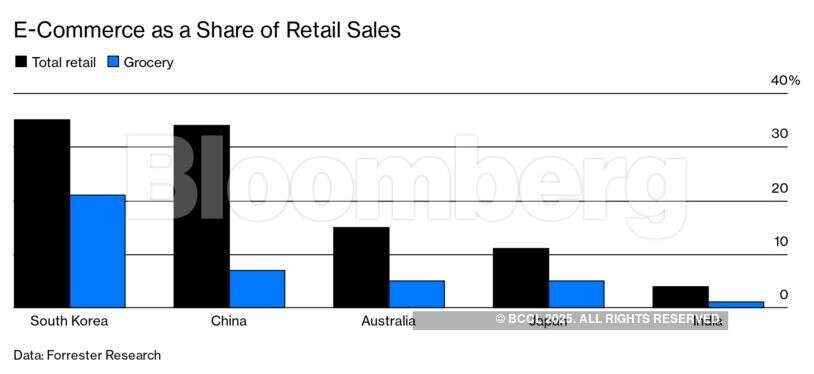
Online sales during the Festival of Lights should leap 42% to $9.2 billion this season, Forrester Research estimates, underscoring the phenomenal speed with which consumers are gravitating toward e-commerce. Over the next four to five years, online shopping could grow five-fold with half-a-billion internet consumers by 2030, marketing trade body MMA and media agency GroupM projected last month.

Anticipating the rising demand, companies are adding staff in warehouses and delivery hubs at an accelerating clip. Flipkart added 115,000 jobs this sales season, up from 70,000 in 2020 and 50,000 in 2019. They’re also recruiting unconventionally. Aiding the effort is the introduction of so-called pink shifts, consisting of just women.

Amazon and Walmart brace for crucial Diwali showdown

At its Chennai warehouse, 23-year-old supervisor Ramya Lakshmi N is barely 45 days into the job and already in charge of managing the floor and meeting targets. Sporting short hair and dressed in a checked shirt over black trousers, she sticks out among the coworkers in hair plaits and traditional salwar kameez dresses.

“We are helping India shop,” said Lakshmi, an MBA graduate in logistics. “Pink shifts are also creating new pathways for women in a fast-growing industry.”

The rivalry between Amazon and Flipkart peaks during Diwali, with both offering steep discounts on everything from smartphones and sports equipment to appliances and keto foods. Offers have begun even earlier than usual, during the inauspicious period of Shradh, a fortnight when Indians pray for their ancestors.

Whoever comes out on top this Diwali gains more than bragging rights. It’s early days for the digital-retail market, and both companies’ sales numbers are pointing sharply up. Importantly, investors will be watching how Amazon and Flipkart -- which is preparing for one of India’s largest IPOs -- fare against domestic competition such as Reliance Industries Inc.

Local contenders enjoy many benefits as Prime Minister Narendra Modi’s government wants to nurture homegrown champions. Amazon and Flipkart are barred from featuring exclusive products or owning inventory, and aren’t allowed to own more than 51% of supermarket chains.

The pair also run the risk of further legislative action from the government, said Arvind Singhal, chairman of consultancy Technopak Advisors Pvt. Meanwhile, the likes of Reliance and Tata Group gain time to catch up with the U.S. rivals while the online channel is in its infancy.

“Sure, online is the future of retail in India,” Singhal said. “But the future is not tomorrow.”
The Confederation of All India Traders, representing millions of small merchants, has threatened to launch protests after Diwali if the government doesn’t bring in policies to curb the online giants.

Unfazed, both Amazon and Flipkart are declaring early victory. Amazon, whose tagline this year is delivering Khushiyon Ke Dibbe -- a boxful of happiness -- said it’s signed up 60% more sellers than in 2020, resulting in record single-day sales. The company recorded a 65% increase in orders from smaller cities and towns, Amazon’s Tiwary said in a phone interview.

Helping to fuel the growth is voice shopping, as customers using the service have more than doubled since last Diwali, he said. About 85% of new customers are coming from smaller cities and beyond, versus 65% a year earlier.

Flipkart, which Walmart bought for $16 billion in 2018, said new sellers during its Big Billion Days sale last week grew 55% compared with last year. Sales of premium smartphones doubled from 2020’s tally, and 42% of these were purchased by customers in small cities and towns. The company sold more than 200,000 iPhone 12 devices at the start of the sale period.

Both Amazon and Flipkart expect to break Diwali records, helped by consumers getting more comfortable with online shopping during the pandemic. Trust in deliveries and digital payments has increased and users are sticking with newfound shopping habits, said Jitender Miglani, a senior Forrester analyst. Meanwhile, in-person shopping is taking time to rebound, even as growth in daily infections has slowed to about 20,000 from a May peak of some 400,000.

“The pandemic has been a blessing in disguise,” Miglani said.

Yamuna Gopinath is one of just millions taking advantage of Diwali bargains. The Bangalore middle-school math teacher stocked up on groceries and household goods on Flipkart, then went on Amazon to get a OnePlus Nord 5G smartphone. “The e-commerce race helps shoppers get the best discounts,” Gopinath said.

The bargains can be eye-popping. Amazon is advertising as much as 70% off on furniture and 40% off smartphones. The Seattle giant hawked Alexa-powered Echo speakers at 1,999 rupees ($27) -- less than a third its sticker price. Flipkart offered as much as 80% off on sunglasses and car accessories and is selling the iPhone 12 Mini at 40,000 rupees, about a 20% discount.

Back at the Flipkart warehouse, Diwali frenzy has gripped everyone from sorters and packers to supervisor Lakshmi -- a window into not just the Amazon-Flipkart rivalry but also the broader Indian consumption boom. Clothing tops the list for many of her colleagues -- but not hers.

“I have my heart set on an iPhone 11,” said Lakshmi. “I’ll use buy-now-pay -later offers to finance it.”