Warren Buffett said Berkshire Hathaway Inc has bought shares of internet retailing giant Amazon.com Inc for the first time, though he has not been the one doing the buying, CNBC reported on Thursday.Buffett said the purchase was made by one of his investment managers, Todd Combs or Ted Weschler, and details would be disclosed later this month in Berkshire's quarterly report of its U.S. stock holdings.The purchase marks a U-turn for Berkshire, where Buffett has long praised the leadership of Amazon Chief Executive Jeff Bezos."Yeah, I've been a fan, and I've been an idiot for not buying," Buffett told CNBC.Buffett's assistant did not immediately respond to a request for comment. Amazon did not immediately respond to a similar request.Shares of companies often rise when Berkshire reveals its support through new stakes, even when the purchases are believed or known to have been made by Combs or Weschler, who together invest about $26 billion.The initial impetus of the portfolio managers has in the past heralded Buffett's eventual forays into some of their investments, often in big ways.It was Combs who in 2012 began investing in industrial and aircraft parts maker Precision Castparts Corp. Four years later, Berkshire completed its purchase of that company for $32 billion, in what remains Buffett's largest acquisition.More recently, it was either Combs or Weschler who in 2016 began investing in iPhone maker Apple Inc.But it was Buffett who ramped up that stake into Berkshire's largest common stock investment, more than 255 million shares, now worth roughly $53 billion.The Amazon purchase adds an additional bond between Buffett and Bezos, whose companies teamed up last year with JPMorgan Chase & Co to form a new venture, Haven, to reduce employee healthcare costs.Berkshire has more than 90 businesses in the insurance, energy, food and retail, industrial, railroad and other sectors, and often buys stocks when buying whole companies appears too expensive.In February, Buffett called acquisition prices "sky-high for businesses possessing decent long-term prospects."Buffett and Berkshire Vice Chairman Charlie Munger will on Saturday answer shareholder questions at Berkshire's annual meeting in Omaha, Nebraska, which normally draws more than 40,000 people.
Exactly two years back, Paytm Founder and CEO Vijay Shekhar Sharma, keeping Alibaba model in mind, took a plunge into the burgeoning e-commerce space where Amazon and Flipkart (now owned by Walmart) were two dominant forces. Nurturing a little grudge that he never had a chance to study at the Harvard University, Sharma de-merged the e-commerce business into a separate entity by the name of Paytm Mall to address India's large online retail opportunity with cashbacks.Confident that the growing number of smartphone users would help it sail through, the new entity started off with the same shareholding as the parent company of Paytm - One97 Communications Limited- and raised $200 million from SAIF Partners and Jack Ma-run Alibaba Group Holding Ltd. Paytm Mall managed to raise over $650 million from Alibaba, SoftBank and SAIF Partners. Alibaba- a pioneer in the online-to-offline (O2O) marketplace- soon realised that giving cashback to attract customers was a short-term strategy which won't help Sharma make Paytm Mall a third big player in the fast-growing Indian e-commerce market poised to touch $84 billion in 2021 from $24 billion in 2017.Paytm Mall's losses mounted and in the financial year 2018, the company posted a loss of nearly Rs 1,800 crore on revenue of Rs 774 crore. According to Forrester Research, the market share of Paytm Mall almost halved in 2018- to 3 per cent from 5.6 per cent in 2017.Sharma, however, is still optimistic and wants to run Paytm Mall in the face of massive competition which, the analysts feel, is the end-game as his focus should be on the digital payments market which Alibaba always wanted his to excel in. Several attempts to reach out to Paytm, including emails, calls and even a personal visit to One97 Communications Limited's Noida Sector 5 office for their version did not elicit any response till the press time.According to Thomas George, Senior Vice President and Head CyberMedia Research (CMR), Paytm is currently facing several challenges. "Paytm is far behind the top two e-commerce players in terms of market share. They have a single-digit share against the top leaders which are commanding over 30 per cent. Plus, the service standard set by these market leaders is quite remarkable," George told IANS.On the other hand, Paytm is not making investments in stocking and delivering products."Paytm Mall's primary catchment segment was its payment wallet customers base. This base is not growing as anticipated," George added.Paytm's Payment Bank vision is also under scrutiny. "The Paytm payment bank could have helped the company to create a buzzing marketplace and attract more consumers onboard. While billionaire investor Warren Buffet's Berkshire Hathaway Inc has invested in Paytm, we had seen Alibaba diluting its stake too," George noted.Over the past few years, Paytm has been bleeding massively in online retail business and there is no respite in sight. In a mega deal in India's e-commerce space, the world's retail giant Walmart in May last year announced it was buying 77 per cent equity stake in the country's largest e-tailor Flipkart for $16 billion.After the two US retails giants, Reliance Industries last year announced to enter the e-commerce space with an aim to transform the lives of around three crore merchants across the country, enabling them to do all that large enterprises and e-commerce giants are able to do with the help of technology. For Paytm Mall, the news of Reliance entering the e-commerce ring was like a nightmare.
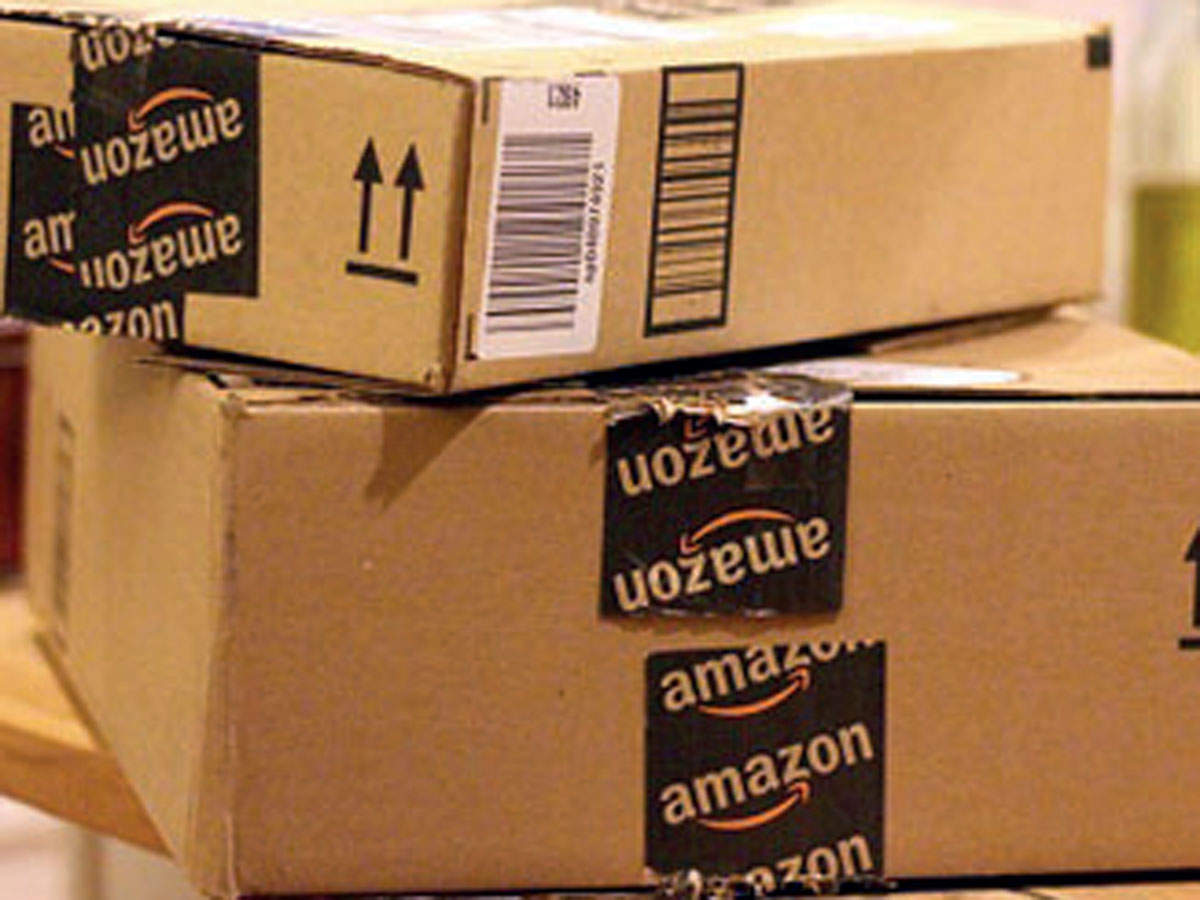 By Nandita BoseBALTIMORE, - Amazon.com Inc dismissed the idea of running a fully automated warehouse in the near future, citing the superior cognitive ability of humans and limitations of current technology.Scott Anderson, director of Amazon Robotics Fulfillment, said technology is at least 10 years away from fully automating the processing of a single order picked by a worker inside a warehouse.There is a misperception that Amazon will run fully automated warehouses soon, Anderson said during a tour of Amazon's Baltimore warehouse for reporters on Tuesday.The technology for a robot to pick a single product from a bin without damaging other products or picking multiple products at the same time in a way that could benefit the e-commerce retailer is years away.Amazon is exploring a variety of technologies to automate the various steps needed to get a package to shoppers, Anderson said."In the current form, the technology is very limited. The technology is very far from the fully automated workstation that we would need," Anderson said.The tour came at a time when the company has come under fire from labor groups and other Amazon critics for allegedly poor working conditions in its warehouses and for increasingly automating jobs and reducing its dependence on human labor.The largest online retailer is also not employing robots in its warehouses that handle fresh food, said Derek Jones, global director of environment, health and safety, who oversees Amazon's fresh food offerings like Amazon Fresh and Amazon Pantry."Just imagine if you want bananas. I want my bananas to be firm, others like their bananas to be ripe. How do you get a robot to choose that?" he said.Amazon runs 110 warehouses in the United States, 45 sorting centers and about 50 delivery stations. It employs 125,000 full-time warehouse workers in the country.The warehouses that employ robots mostly handle general merchandise, which includes everything from lamps and clothing to kayaks and bikes.The company said it is not changing the level of productivity at its warehouses to catch up with its recent one-day shipping announcement. It is instead making changes to the transportation and delivery process.Last month, Amazon said it plans to deliver packages to members of its loyalty club, Prime, in just one day instead of two.Anderson said Amazon's current target is four hours from the time a product is ordered to the time it leaves the warehouse, and the company is sticking with that.The e-commerce company did not share details on how the decision to raise its minimum wage to $15 had impacted workforce turnover.However, it said applications for seasonal jobs doubled to 850,000 at the end of October last year from the record number of applications the company received in August 2017, when it held a national job fair.Amazon raised the minimum wage to $15 per hour for U.S. employees in November, giving in to critics of what they said was poor pay and working conditions.
Amazon installed bulletproof panels at the Seattle office of its founder and CEO Jeff Bezos - designed to withstand multiple shots from a military assault rifle, the media reported.
According to a report in The Daily Beast on Tuesday, the bulletproof project to safeguard Bezos, who has a net worth of $120 billion, cost Amazon $180,000.
Although the cost is less, "it demonstrates the lengths Bezos is willing to go to guard against real or perceived threats as his public profile grows," the report said.
Amazon spends $1.6 million a year to protect its boss from external threats, the report added.
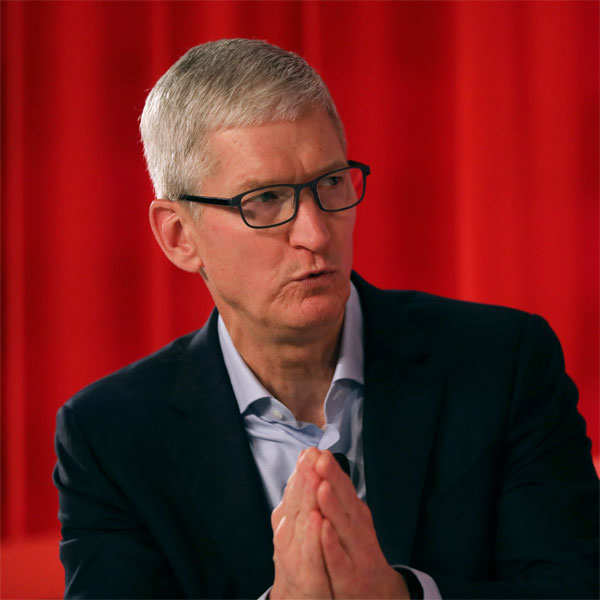
Apple spent about $310,000 on personal security services for CEO Tim Cook last year while Oracle spent over $1.6 million to protect CEO Larry Ellison.
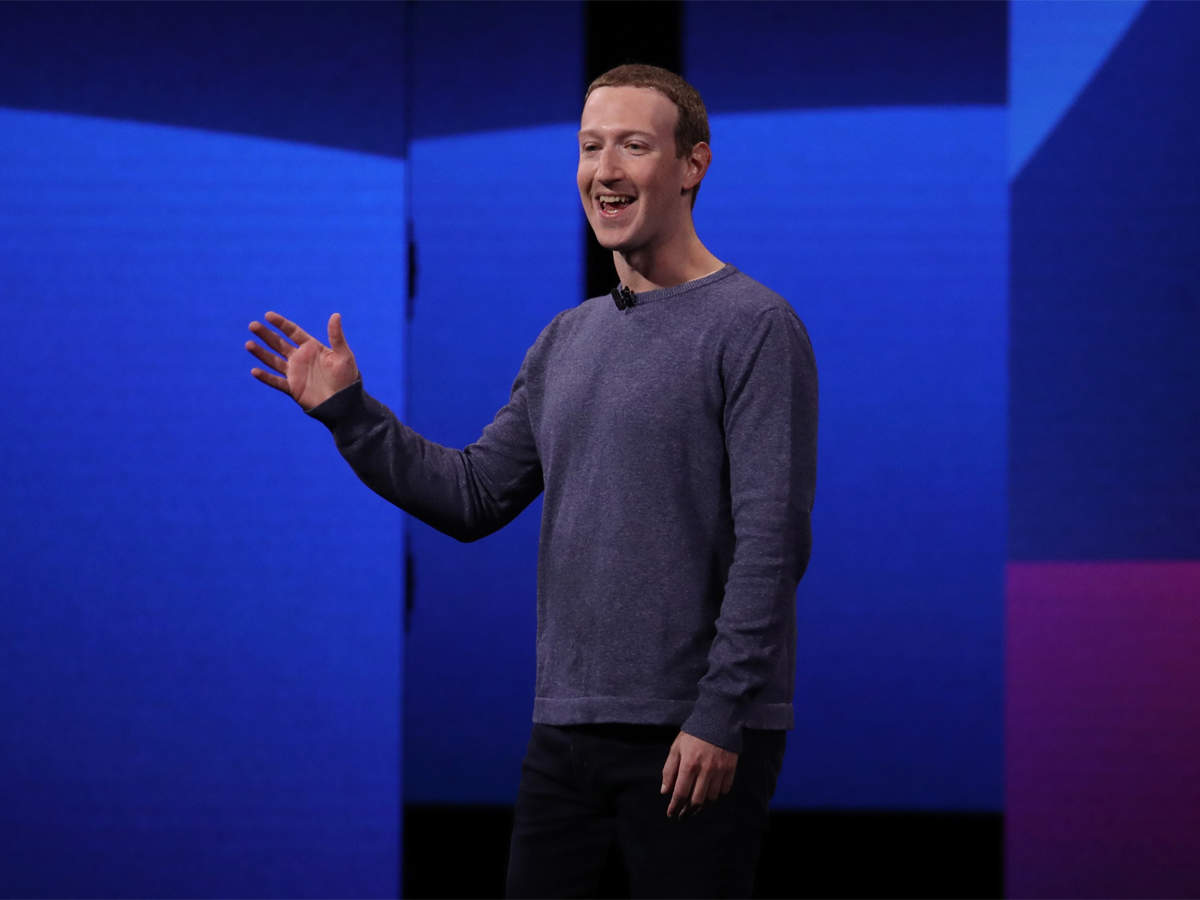
 Facebook, however, spent $20 million on its CEO Mark Zuckerberg's personal security last year - four times more than what he received for security in 2016, owing to the growing privacy scandals the social networking giant is facing globally.
Gavin de Becker, a veteran security consultant at Amazon, wrote a first-person account in The Daily Beast last month, claiming that Saudi Arabia hacked Bezos' smartphone and allegedly shared personal information about his extramarital affair with a media outlet.
Facebook, however, spent $20 million on its CEO Mark Zuckerberg's personal security last year - four times more than what he received for security in 2016, owing to the growing privacy scandals the social networking giant is facing globally.
Gavin de Becker, a veteran security consultant at Amazon, wrote a first-person account in The Daily Beast last month, claiming that Saudi Arabia hacked Bezos' smartphone and allegedly shared personal information about his extramarital affair with a media outlet.
 The monarchy was "intent on harming Jeff Bezos" over The Washington Post (owned by Bezos) coverage of murdered journalist Jamal Khashoggi, wrote de Becker.
"Our investigators and several experts concluded with high confidence that the Saudis had access to Bezos' phone, and gained private information," de Becker said.
The private phone messages of Bezos sent to his lover, former TV anchor Lauren Sanchez, were published in The National Enquirer in October.
Saudi journalist Khashoggi was murdered at the Saudi consulate in Turkey's Istanbul in October 2018.
Saudi Arabia has denied involvement in the Bezos affair.
The monarchy was "intent on harming Jeff Bezos" over The Washington Post (owned by Bezos) coverage of murdered journalist Jamal Khashoggi, wrote de Becker.
"Our investigators and several experts concluded with high confidence that the Saudis had access to Bezos' phone, and gained private information," de Becker said.
The private phone messages of Bezos sent to his lover, former TV anchor Lauren Sanchez, were published in The National Enquirer in October.
Saudi journalist Khashoggi was murdered at the Saudi consulate in Turkey's Istanbul in October 2018.
Saudi Arabia has denied involvement in the Bezos affair.
Ford Motor Co said on Tuesday it partnered with Amazon.com Inc to allow members of the ecommercecompany's loyalty club Prime to deliver packages to their cars when they are not at home.The world's largest online retailer last year started rolling out a program in the United States to deliver packages to its members' parked cars, as part of a drive to leave parcels where they cannot be easily stolen.The 'Key by Amazon In-Car delivery' offering will be available for owners of select Ford 2017 and later model vehicles equipped with connectivity service, as well as for owners of Lincoln 2018 and later model cars, Ford said."It's a convenient, secure way to ensure your packages are delivered directly to you when you are out for the day, anticipating bad weather or wondering if your package is safe," the automaker said.
